

TL;DR: Made-to-order Polynesian fashion is inherently more sustainable than fast fashion. By producing only what is ordered, Samoan-owned brands eliminate overproduction, reduce textile waste, and make items with a purpose and a recipient. This aligns with the values of Fa'a Samoa, where nothing is wasted and everything is made for a reason. This guide explains why made-to-order is the most ethical and sustainable way to engage with Pacific fashion.
Introduction
Fashion is one of the world's most polluting industries. It generates around 10 percent of annual global carbon emissions, produces 20 percent of global wastewater, and discards an estimated 92 million tonnes of textile waste each year. The fast fashion model, which drives this damage, is built on overproduction: making more than is needed, selling what sells, and discarding what does not.
The made-to-order alternative is fundamentally different. Items are only made when someone orders them. There is no surplus, no landfill pile, no unsold inventory being burned or buried. Every item produced has a recipient and a purpose.
For Polynesian fashion, made-to-order is not just a business model. It is a philosophical alignment with the values embedded in Pacific cultural traditions, particularly Fa'a Samoa.
The Fast Fashion Problem
Fast fashion works by pushing consumers to buy more, faster. Trend cycles have accelerated from two seasons per year to dozens of micro-seasons. Prices are kept artificially low by cutting costs in manufacturing, often in ways that harm workers and the environment. Quality is sacrificed for price. The implicit message to consumers is: this is disposable.
For Pacific design specifically, fast fashion creates an additional problem: cultural dilution. When Pacific patterns are produced cheaply in bulk, stripped of their cultural context, and sold as generic "tribal" prints, the design is diminished along with the culture it comes from. The patterns lose their meaning when they are treated as interchangeable decoration.
The Pacific communities whose cultural traditions underpin these designs receive no benefit from this commercial activity. Their cultural knowledge is extracted and monetised by outsiders. This is not just ethically problematic — it is a form of economic harm directed at communities that already face significant economic disadvantage.
The Made-to-Order Advantage
Made-to-order production inverts the fast fashion logic in every dimension:
No overproduction: Items are only made when ordered. There is no inventory of unsold stock. No items go to landfill because they were produced in excess of demand.
Better quality: When items are made individually rather than in bulk, there is more opportunity for quality control. The focus shifts from volume to the quality of each individual piece.
Lower material waste: Bulk production involves significant material waste in setup and cutting. Made-to-order production minimises this by producing only what is needed.
Purposeful production: Every item made has a specific recipient. It exists because someone chose it, not because a production run needed to be filled.
Longer product life: Items produced with quality materials and care tend to last longer than fast fashion equivalents. A well-made Samoan-designed hoodie that is meaningful to its owner is worn longer and cared for better than a cheap fast fashion item.
Fa'a Samoa and Sustainability
The alignment between made-to-order production and Fa'a Samoa values is not coincidental. Traditional Samoan culture is deeply sustainable in its orientation, rooted in practices that evolved to maintain community life on islands where resources were finite and precious.
In traditional Samoan culture:
- Food is prepared for specific occasions and people, not overproduced and wasted
- Fine mats (ie toga) are made with enormous care and labour, preserved for generations, and exchanged rather than discarded
- Siapo bark cloth is produced with specific purposes and recipients in mind
- Tautua (service) is directed toward specific people and communities, not performed in the abstract
This orientation — making things for specific purposes, with care, for specific people — is exactly what made-to-order production embodies. The fast fashion model, which treats production as a volume game and consumers as interchangeable, is fundamentally alien to Fa'a Samoa values.
The Environmental Case for Polynesian Made-to-Order Fashion
The environmental numbers are significant. A single cotton t-shirt requires approximately 2,700 litres of water to produce. A pair of jeans requires around 10,000 litres. When fast fashion brands produce millions of items that are never sold, this water — and the energy, chemicals, and labour involved in production — is entirely wasted.
Polyester and synthetic fabrics, which dominate fast fashion, do not biodegrade. They shed microplastics into waterways during washing. They persist in landfill for hundreds of years. The environmental cost of synthetic fast fashion Pacific prints is thus compounded: cultural harm and environmental harm in one product.
Made-to-order production does not eliminate all environmental cost, but it dramatically reduces overproduction waste. Combined with quality materials that last longer, the environmental footprint per item is significantly smaller than its fast fashion equivalent.
How The Koko Samoa Does It
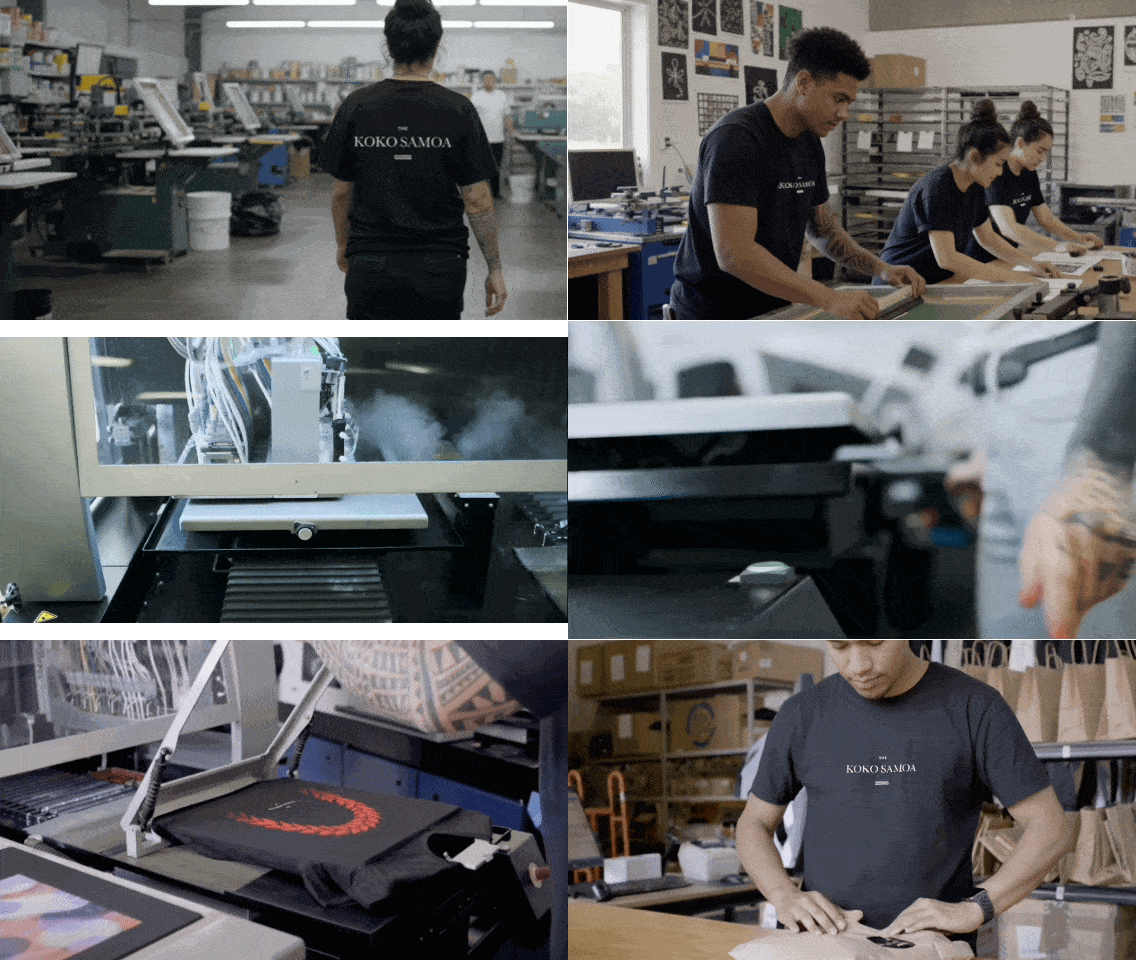
At The Koko Samoa, everything we make is made to order. When you place an order, your item is made for you. Not picked from a pile of identical products, not taken from an overproduced inventory. Made. For you. On purpose.
This means our production times are longer than a fast fashion retailer. We are transparent about this. If you need something for tomorrow, we are probably not the right choice. If you want something made with care, designed with genuine cultural knowledge, and produced without waste, we are exactly the right choice.
Our clothing collection features Samoan and Polynesian-inspired designs that carry genuine cultural meaning. Our accessories bring Pacific design to everyday objects. Every item is made by a Samoan-owned brand, made to order, made with purpose. Explore our full collection.
Conclusion
Sustainable Polynesian fashion is not just about the environmental benefits of made-to-order production. It is about an alignment between production values and cultural values. Fa'a Samoa is built on purposeful, community-oriented action. Made-to-order fashion reflects this: every item exists because someone chose it, made by people who understand and respect what the design represents.
The choice to buy made-to-order Polynesian fashion from a Samoan-owned brand is a triple positive: better for the environment, better for the culture, and better for the community whose creative tradition is being honoured rather than exploited.
What the Samoan prints actually mean covers what has just been made, and how to tell a real Pacific design from a file sold on every garment.
Frequently Asked Questions
Why is made-to-order more sustainable than fast fashion?
Made-to-order production eliminates overproduction entirely: no items are made unless ordered, so there is no surplus inventory going to landfill. Quality materials last longer than fast fashion equivalents. Per-item material waste is lower because production is not bulk-scaled. The overall environmental footprint of made-to-order fashion is significantly smaller than fast fashion.
How does Fa'a Samoa align with sustainable fashion?
Fa'a Samoa is built on purposeful, community-oriented action. Traditional Samoan culture produces things for specific people and occasions, preserves valued objects across generations, and orients all activity toward community benefit. Made-to-order fashion — producing items with purpose for specific recipients — reflects these values far better than fast fashion's volume-and-discard model.
What is wrong with fast fashion Pacific design?
Fast fashion Pacific design strips cultural motifs of their meaning, mixes patterns from unrelated cultures without understanding, produces items that look vaguely Pacific but carry no cultural knowledge, and generates commercial profit for non-Pacific brands without benefit to Pacific communities. It is both culturally harmful (appropriation) and environmentally harmful (overproduction and waste).
Is sustainable Polynesian fashion more expensive?
Made-to-order Polynesian fashion from quality Samoan-owned brands typically costs more per item than fast fashion equivalents. However, quality items last significantly longer, the cost-per-wear over the item's life is often lower, and the cultural and environmental value of the purchase is not comparable to fast fashion. The true cost of fast fashion includes environmental damage that is not reflected in the price.
Where can I buy sustainable Samoan-designed clothing?
The Koko Samoa (thekokosamoa.com.au) is a Samoan-owned brand producing made-to-order clothing and accessories with authentic Polynesian design. Every item is produced when ordered, eliminating overproduction waste. The designs draw on genuine Samoan and Polynesian cultural traditions.


