TL;DR: Authentic Samoan design and fast fashion Pacific prints are not the same thing. The difference matters: one carries cultural knowledge, community accountability, and genuine meaning; the other exploits Pacific aesthetics for profit without respect or benefit to the community. This guide explains why authentic Samoan design matters, how to tell the difference, and why supporting Samoan-owned brands is a form of cultural respect.
Introduction
Pacific design has become fashionable. Geometric patterns inspired by Polynesian tattooing traditions appear on clothing in chain stores across New Zealand, Australia, and internationally. At first glance this might seem like recognition of Pacific culture's visual power. On closer examination, it is often something else: the extraction of cultural aesthetics for profit, without acknowledgment, cultural knowledge, or benefit to the communities whose traditions are being borrowed.
This is not a minor issue. It is part of a long pattern in which Pacific cultures have been exoticised, consumed, and profited from by outsiders. Understanding the difference between authentic Samoan design and fast fashion Pacific prints is essential for anyone who wants to engage with Pacific visual culture respectfully.
What Is Authentic Samoan Design?
Authentic Samoan design originates from within the cultural tradition. It is produced by designers, artists, and brands who:
- Have cultural knowledge of the traditions they are drawing from
- Can articulate what specific motifs mean and why they are used
- Are accountable to the Samoan community — either as members of it or as partners with genuine community relationships
- Produce their work in ways that benefit, rather than exploit, the source culture
Authentic Samoan design does not need to be traditional in form. Contemporary designs that use tatau-inspired geometric patterns in new ways, that apply siapo visual vocabulary to modern products, or that reinterpret Pacific colour palettes for contemporary fashion are all forms of authentic cultural design — as long as they come from a place of genuine cultural knowledge and accountability.
What Is Fast Fashion Pacific Design?
Fast fashion Pacific design is the production of clothing and accessories featuring Pacific-looking patterns by brands that have no meaningful connection to Pacific cultures. Key characteristics:
- Generic "tribal" or "Polynesian" prints that mix motifs from multiple unrelated cultures without understanding or attribution
- Production in bulk with no cultural consultation or community involvement
- Pricing that reflects the low cost of pattern reuse rather than the labour of cultural knowledge
- Marketing that uses Pacific cultural imagery without engaging Pacific people or communities
- No portion of proceeds going to Pacific communities
The scale of this problem is significant. In New Zealand alone, Pacific motifs appear on clothing, homewares, sportswear, and accessories produced by mainstream brands that have no relationship with Pacific communities. The same patterns that carry sacred cultural meaning in their original context are treated as visual decoration freely available for commercial use.
Why It Matters: The Stakes of Cultural Design
The argument for cultural authenticity in design is not only ethical. It is practical and cultural.
For the community: When Pacific design generates commercial value, that value should benefit Pacific communities, not extract from them. Samoan-owned brands reinvest in the community. Fast fashion brands do not.
For the design itself: Fast fashion Pacific prints are typically impoverished versions of the original traditions. They strip motifs of context, combine culturally specific elements from unrelated traditions, and produce designs that look vaguely Pacific but carry no actual meaning. Authentic Samoan design is richer, more specific, and more interesting precisely because it comes from a place of genuine cultural knowledge.
For wearers: Wearing a fast fashion Pacific print is wearing something empty. Wearing an authentic Samoan design from a Samoan-owned brand is wearing something that carries real meaning, real history, and a real connection to a living culture. The difference is felt, even if it is not always articulated.
The Made-to-Order Alternative
Fast fashion is defined by overproduction: making large quantities of items in advance, in the hope that they will sell. This produces enormous waste. The fashion industry is one of the most polluting industries in the world, with overproduction and disposal of unsold stock representing a massive environmental cost.
Made-to-order production is the opposite: items are only made when someone orders them. This produces no surplus stock, no waste from unsold inventory, and no pressure to cut corners on quality. Every item is made with purpose, for a specific person who has chosen it.
Made-to-order is more aligned with Fa'a Samoa values than mass production. Fa'a Samoa is not about scale and speed. It is about quality, relationship, and purpose. Making something when it is needed, for the person who wants it, reflects the same ethic as cooking for a community feast: you make what is needed, with care, for the people you are serving.
How to Identify Authentic Samoan Design
When shopping for Pacific design, ask:
- Who owns this brand? Samoan-owned brands are accountable to the cultural community. Look for explicit Samoan/Pacific ownership.
- Can the brand tell you what the patterns mean? Authentic cultural design comes with cultural knowledge. If a brand cannot explain the cultural significance of their patterns, that is a significant red flag.
- Where and how is it made? Made-to-order production with quality materials is a better indicator of cultural accountability than bulk fast fashion production.
- Is the pricing appropriate? Very cheap Pacific design often reflects a fast fashion model with no cultural knowledge or community investment built into the price.
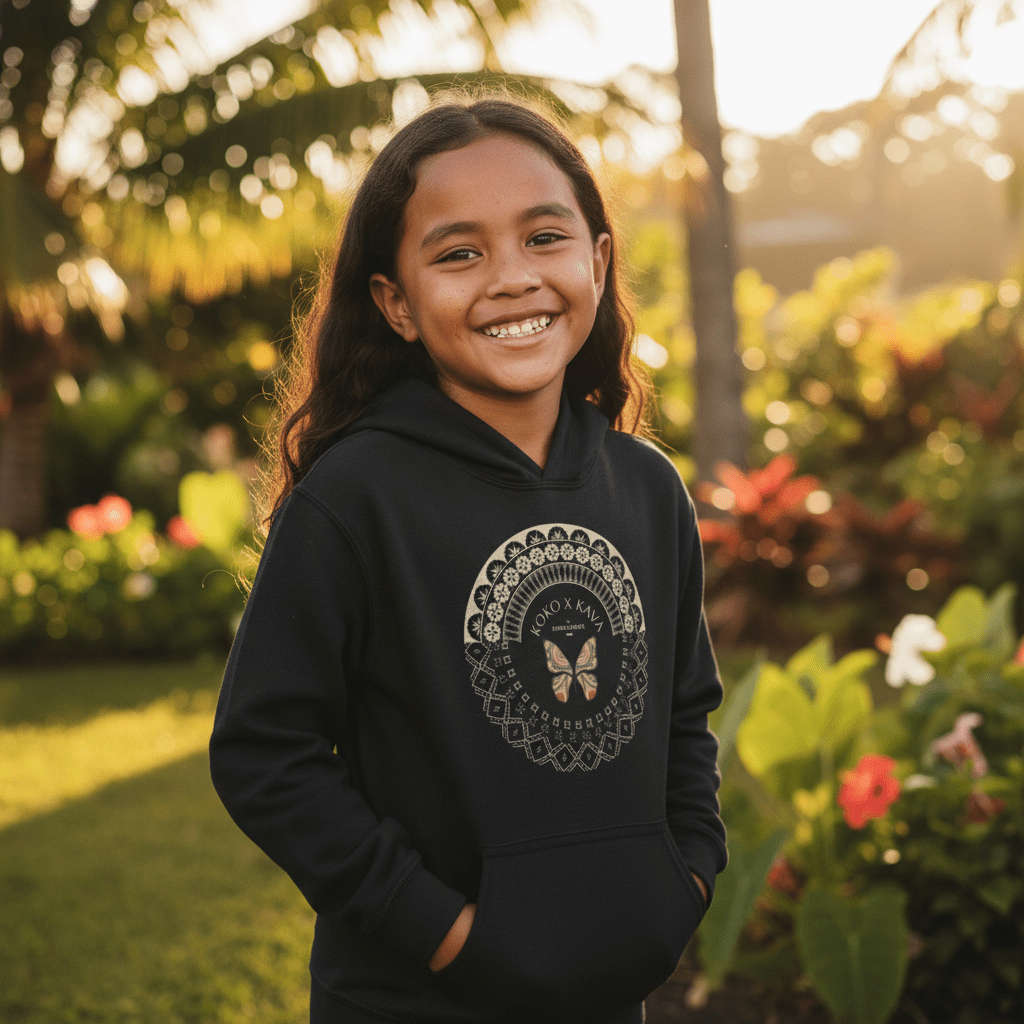
At The Koko Samoa, we meet every one of these criteria. We are Samoan-owned, our designs draw on specific Samoan and Polynesian visual traditions, we can explain what our patterns mean, and we produce everything made to order. Our clothing collection is for people who want to wear Pacific culture with knowledge and respect. Explore our full range and read more on our culture blog.
Conclusion
The choice between authentic Samoan design and fast fashion Pacific prints is not just a consumer preference. It is a choice about what kind of relationship you want to have with Pacific culture. Authentic design from Samoan-owned brands supports communities, carries genuine meaning, and honours the traditions that underpin the visual language being used. Fast fashion Pacific prints do none of these things.
The patterns on a Samoan-designed garment from The Koko Samoa and the patterns on a mass-produced "tribal print" from a chain store may look superficially similar to an untrained eye. But one carries three thousand years of cultural knowledge and community accountability. The other carries none. That difference is everything.
What the Samoan prints actually mean has the practical test: five signals that separate a Pacific owned design from a mass produced copy.
Frequently Asked Questions
What is cultural appropriation in Pacific fashion?
Cultural appropriation in Pacific fashion occurs when brands or individuals use Pacific cultural motifs — particularly tatau-inspired geometric patterns, siapo designs, or cultural symbols — without the cultural knowledge, community connection, or accountability that should accompany these designs. It includes mass-producing Pacific-looking patterns for commercial profit without engaging or benefiting Pacific communities.
How can I tell if Pacific design is authentic?
Look for Samoan or Pacific ownership of the brand, the ability of the brand to explain what their patterns mean culturally, made-to-order or small-batch production that reflects quality over volume, and a demonstrated connection to the Pacific community. Authentic cultural design comes with cultural knowledge and accountability.
Why does it matter whether Pacific clothing is made by Samoan-owned brands?
Samoan-owned brands are accountable to the cultural community. They have genuine cultural knowledge of the traditions they draw from. Their profits support Samoan families and businesses. Their designs carry authentic meaning rather than surface-level aesthetics. Buying from Samoan-owned brands ensures the cultural exchange is respectful and beneficial rather than extractive.
Is made-to-order better than fast fashion for Pacific design?
Yes. Made-to-order production eliminates overproduction and waste, aligns with values of purposeful making over volume production, and typically results in higher quality items. It also reflects a deeper respect for the cultural design being produced: each item is made with purpose for a specific person, not manufactured in bulk as a generic consumer product.
Can non-Samoans wear Samoan-designed clothing from Samoan-owned brands?
Yes, with cultural awareness. Buying from Samoan-owned brands ensures the cultural knowledge and accountability are in place on the production side. Wearing Samoan-designed clothing from Samoan brands, understanding what the patterns represent, and not claiming cultural identity you do not have is a form of respectful engagement with Pacific culture.


