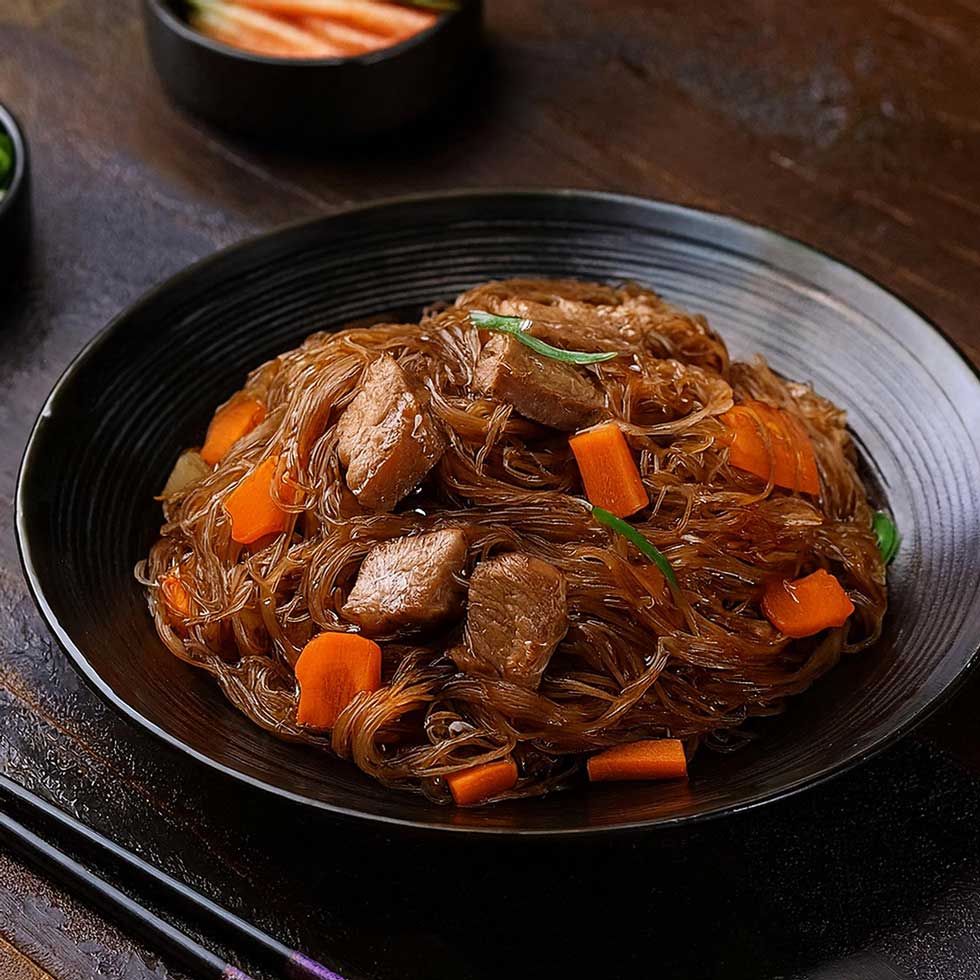
Sapa Sui is a Samoan glass noodle stir-fry: thin mung bean vermicelli tossed with meat, garlic, onion, soy sauce, and oyster sauce. It cooks in about 30 minutes and it is almost always the first tray finished at any to'onai or potluck. If you have never made it before, the short version is: soak the noodles, brown the meat, build the sauce, fold everything together, serve hot.
In this guide
- What is Sapa Sui?
- Where did it come from?
- What you need
- How to make it (step by step)
- What to serve with Sapa Sui
- Tips and common mistakes
- Variations worth trying
- Frequently asked questions
What is Sapa Sui?
Sapa Sui is Samoa's take on chop suey: glass noodles (made from mung bean starch) stir-fried with meat and a soy-oyster sauce base. The noodles start white and turn translucent when cooked, which is how you know they are ready.
It is less oily than Chinese versions and more saucy, somewhere between a stir-fry and a braise. That creamier, saucier quality is what makes it so good over rice or taro. It tastes like someone's aunty made it with love and three extra glugs of oyster sauce.
Where did Sapa Sui come from?
The name is a direct Samoanisation of "chop suey." The dish arrived with Chinese labourers during the German colonial plantation boom in the late 1800s. Those workers brought their cooking with them, Samoans adapted it to local tastes, and Sapa Sui became its own thing entirely within a generation.
Today it sits alongside palusami and oka as a fixture at White Sunday, fa'alavelave tables, and birthday spreads. It is not considered Chinese food by Samoans. It is Samoan food. Full stop.
What you need
Here are the core ingredients. Quantities below are for four to six people.
| Ingredient | Amount | Notes |
|---|---|---|
| Glass noodles (mung bean vermicelli) | 200g | Sold as "glass noodles" or "cellophane noodles" in most Asian grocery stores |
| Beef, pork, chicken, or mince | 400g | Thinly sliced or minced; all work equally well |
| Garlic | 4 cloves, minced | Do not skip this |
| Brown or white onion | 1 large, sliced | Goes in early to build the base |
| Soy sauce | 3 tablespoons | The main flavour driver |
| Oyster sauce | 2 tablespoons | Adds richness and depth |
| Cornstarch | 1 teaspoon | Mixed with a splash of water to thicken the sauce |
| Oil | 2 tablespoons | Neutral oil for frying; also toss soaked noodles in a little oil to stop clumping |
| Optional vegetables | To taste | Cabbage, carrot, bok choy all work; add after the meat |

Six traditional Samoan mains in a keepsake hardcover you will actually keep on the shelf, not shove in a drawer.
How to make Sapa Sui (step by step)
Step 1: Soak the noodles. Put the glass noodles in a large bowl. Cover with warm water and soak for 15 minutes until soft and pliable. Drain well, then toss with a teaspoon of oil. This is the move that stops them from clumping together later.
Step 2: Build the base. Heat oil in a wok or large frying pan over high heat. Add onion and cook for two to three minutes until softened. Add garlic and cook for another minute. You want it fragrant but not burnt.
Step 3: Brown the meat. Add your meat of choice and cook through. If using mince, break it up as it cooks. Thinly sliced beef or pork will only need three to four minutes. Do not overcrowd the pan or the meat steams instead of browning.
Step 4: Add the sauces. Pour in the soy sauce and oyster sauce. Stir everything together so the meat is coated. Mix your cornstarch with two tablespoons of cold water and pour that in too. The sauce will thicken quickly, which is what you want.
Step 5: Fold in the noodles. Add the drained noodles and toss until everything is combined and the noodles are coated in sauce. If you are adding vegetables, put them in just before the noodles so they stay slightly crisp. Taste and adjust: more soy if it needs salt, a splash of water if it feels too thick.
Step 6: Serve hot. Sapa Sui is best straight from the pan. It holds at room temperature for about 20 minutes before the noodles start to absorb all the remaining sauce and clump. Serve it while it still has that glossy, saucy finish.
What to serve with Sapa Sui
At a Samoan function, Sapa Sui sits next to taro and rice and usually gets piled on top of both at the same time. That combination is not accidental. The starchy base soaks up the sauce and keeps you going back for more.
For a weeknight at home, it works well with:
- Steamed white rice (the classic)
- Boiled taro or taro chips
- Chilli oil on the side for heat
- Fresh coriander scattered on top for brightness
- A cold Samoan cocoa drink to finish
If you want a full Sunday spread, pair it with palusami or a pot of Kale Moa (Samoan chicken curry) and you have got an entire to'onai table covered.
Tips and common mistakes
Noodle clumping. The main issue people run into. Fix it in two places: oil the noodles after soaking, and do not let the finished dish sit uncovered for too long before serving. If it clumps in the pan, add a small splash of water and toss it over heat.
No glass noodles in the pantry. Thin spaghetti or angel hair pasta works as a substitute. Cook to slightly under al dente before adding it to the pan. The texture is different but the flavour profile holds.
Sauce too thin. Add a little more cornstarch slurry (equal parts cornstarch and cold water) a teaspoon at a time until it coats the noodles properly.
Sauce too salty. A squeeze of lime juice cuts through salt better than sugar does. A little sesame oil stirred in at the end also rounds out an over-seasoned batch.
Leftovers. Sapa Sui keeps in the fridge for two to three days. Reheat in a pan with a splash of water over medium heat. Microwave works too but the wok method keeps the texture much better.

24 traditional Samoan recipes in one hardcover A4 book. The combined edition of both volumes, made to last.
Variations worth trying
Beef Sapa Sui. The most common version. Use thin-sliced sirloin or rump. It cooks fast and picks up the sauce well.
Pork Sapa Sui. Pork mince or thin-sliced shoulder both work. Pork has a little more fat than lean beef which makes the finished dish slightly richer.
Chicken Sapa Sui. Thigh fillet, not breast. Breast dries out too quickly over high heat. Chicken thigh stays juicy and absorbs the sauce better.
Vegetable Sapa Sui. Swap the meat for a combination of cabbage, carrots, bok choy, and mushrooms. Shiitake mushrooms in particular give you that meaty, umami depth without any meat at all. Double the oyster sauce to compensate for the missing fat from the meat.
Any of these versions will sit comfortably on the same table as Oka (Samoan raw fish salad) as part of a wider spread. They balance each other well: Oka is bright and acidic, Sapa Sui is warm and savoury.
Frequently asked questions
What are glass noodles made from?
Mung bean starch and water. That is it. They have no wheat, which makes Sapa Sui naturally gluten-free if you swap standard soy sauce for tamari. They are sold dry, look white in the packet, and turn fully transparent when cooked.
Can I make Sapa Sui ahead of time?
Yes, with one note. Cook it to about 90 percent done (noodles just softened, sauce slightly thinner than you want), then cool and refrigerate. Finish it in the pan with a splash of water just before serving. If you cook it fully and refrigerate it, the noodles absorb all the remaining sauce overnight and the texture suffers.
Is Sapa Sui the same as Chinese chop suey?
It comes from the same origin story but it is its own dish now. Samoan Sapa Sui uses glass noodles instead of egg noodles, has more sauce, less oil, and a flavour profile built around soy and oyster sauce rather than the sweeter Americanised versions. After 130 years of Samoan kitchens making it their own way, the two dishes have drifted far apart.
What if I cannot find glass noodles?
Thin spaghetti cooked to just under al dente is the closest substitute for texture. Rice vermicelli also works but absorbs sauce faster and can turn mushy quickly, so serve it immediately. Check your nearest Asian supermarket first as glass noodles are inexpensive and widely stocked.
How do I stop the noodles from clumping?
Two steps: toss the drained soaked noodles in a little neutral oil before they go into the pan, and serve the dish while it is still hot. The oil coats each strand and keeps them separate. Once the dish cools and sits, the noodles will bind together regardless, so there is no fix for a cold bowl left out too long.
What is the right amount of soy sauce?
Start with three tablespoons for 400g of meat and 200g of noodles. Taste before you add the cornstarch slurry and adjust there. Different soy sauces have different salt levels, so use the recipe as a starting point rather than a fixed rule. You can always add more; you cannot take it out.
Cook the full spread
Sapa Sui is one dish. The Samoan Delights cookbook has 24 more. Traditional recipes written down the way they are actually cooked.
Browse all cookbooks →Made-to-order by a Samoan-owned brand. Worldwide shipping.


