

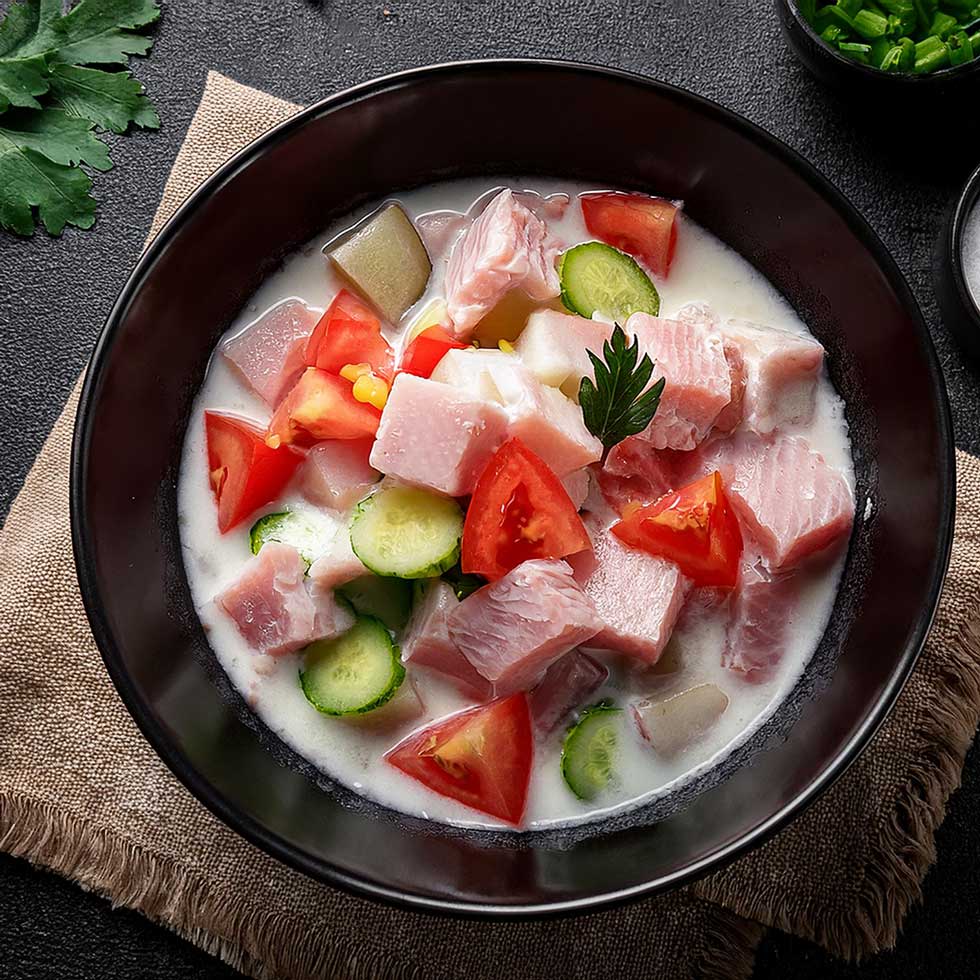
Oka i'a is Samoa's answer to ceviche: fresh fish cured in lemon or lime juice, then folded into thick coconut cream with onion, tomato and cucumber. The whole thing comes together in under 30 minutes, no heat required. Done well, it tastes exactly like a Samoan afternoon near the water.
Below you'll find the full method, regional variations, ingredient swaps and the most common questions people ask before making oka for the first time.
In this guide
This recipe lives in the Samoan Recipe Club — the full Samoan Delights collection on your phone while you cook. Your screen stays awake, ingredients tick off as you go, and every dish comes with the story behind it. Plus 30% off everything in the store, automatically.
Prefer it on your shelf? The hardcover cookbook →
- What is oka and where does it come from?
- Oka at a glance
- What you need to make oka
- How to make Samoan oka
- Regional variations and smart swaps
- What to serve with oka
- Make-ahead and storage tips
- Take more recipes home
- Frequently asked questions
What is oka and where does it come from?
Oka is one of the oldest dishes in Samoa. Long before refrigeration, fishermen would slice their catch on the canoe and cure it with freshly squeezed lemon from trees growing on the shore. The citric acid firms the flesh and kills surface bacteria, a technique found across Polynesia and Latin America independently.
During the 19th-century copra trade, metal knives, tinned coconut cream and Mexican limes arrived in the islands. These additions refined the technique, but the spirit stayed the same: eat the sea while it is still fresh. Every village developed its own version. In Manono, diced cucumber adds crunch. In Savai'i, cooks stir in crushed chilli and use a splash of seawater instead of table salt. Urban Apia cafes now call it Samoan ceviche, though aunties will tell you it is only right when the coconut is freshly grated.
For the diaspora, oka is one of the most nostalgic dishes to recreate. Families in Auckland swap yellowfin for king salmon. Los Angeles aunties use mahi mahi. Everyone debates whether canned coconut cream can ever match a freshly husked nut. The answer depends on who is judging.
Oka at a glance
| Detail | Notes |
|---|---|
| Prep time | 15 to 20 minutes |
| Marinating time | 5 to 15 minutes (no more) |
| Cooking required | None |
| Best fish | Tuna, snapper, wahoo, king salmon |
| Serves | 4 to 6 as a side |
| Served at | Family gatherings, to'onai, weddings, potlucks |
| Similar dishes | Fijian kokoda, Tahitian poisson cru |
What you need to make oka
- Fresh firm fish such as tuna, snapper or wahoo (sashimi-grade is ideal)
- Lemon or lime juice, freshly squeezed
- Full-fat thick coconut cream
- Onion, finely diced
- Tomato, diced
- Cucumber, diced (optional but adds crunch)
- Salt to taste
- Fresh chilli, finely sliced (optional)
Exact gram weights, ratios and brand recommendations are included in the Samoan Delights recipe books below.
How to make Samoan oka
- Cut fresh fish into small, even bite-sized cubes and place in a cold bowl.
- Pour over enough lemon or lime juice to fully coat the fish. The pieces should be submerged. Leave for 5 to 10 minutes until the flesh turns opaque on the outside.
- Drain off most of the excess citrus (a little left behind is fine and adds brightness).
- Add diced onion, tomato and cucumber. Season with salt.
- Fold in the coconut cream gently until everything is coated.
- Taste and adjust salt. Add sliced chilli if using.
- Serve immediately, or chill for up to 20 minutes. Oka does not improve with long marinating.
Regional variations and smart swaps
Traditional oka uses yellowfin tuna, but king salmon, trevally, wahoo and snapper are all excellent substitutes. The fish must be extremely fresh. Flash-frozen sashimi-grade fish is the safest option if fresh is not available.
Diaspora families across Auckland, Sydney and California have adapted the recipe based on local fish availability. Some cooks add spring onion for a milder bite, or replace cucumber with capsicum. In Savai'i, a little seawater is used in place of table salt, adding a mineral note that is hard to replicate but worth trying with good quality sea salt flakes.
Coconut cream matters more than people expect. Use full-fat canned or fresh if you can get it. Light coconut milk waters the dish down and changes the texture entirely.
What to serve with oka
- Boiled taro or breadfruit for a traditional pairing
- Taro chips or corn chips for a modern potluck version
- Lettuce cups or tortilla boats for parties
- Topped with toasted coconut flakes or finely sliced spring onion
Oka is also a natural companion to other Samoan mains at a to'onai spread. It pairs well alongside palusami and kale moa.
Make-ahead and storage tips
Oka is best made fresh. If you need to prep ahead, dice and refrigerate the fish and vegetables separately, then mix with citrus and cream just before serving. Leftovers can be stored in the fridge for up to 24 hours, but the fish will continue to cure in the acid and the texture changes noticeably.
Cooking this for a crowd is its own problem. What a Samoan feast table is built from sets out which Samoan dishes scale to thirty people and which have to be made on the morning.
Frequently asked questions
Is oka safe to eat if the fish is raw?
Yes, when made with very fresh or sashimi-grade fish that has been kept cold throughout. The citrus acid firms the flesh and changes its texture, but this is not the same as heat-cooking. If you are cooking for young children, elderly guests or anyone with immune concerns, use fish that has been previously frozen to sashimi standards, which kills most parasites.
Can I use frozen fish for oka?
Yes. Flash-frozen sashimi-grade tuna or salmon works well. Thaw it fully in the fridge, not at room temperature, and pat it dry before cutting. Avoid watery or previously thawed-and-refrozen fish, which breaks down when marinated.
How long should I marinate the fish?
5 to 15 minutes is the traditional range. Much longer and the acid over-cures the fish, making it rubbery and sour. Some families go as short as 2 to 3 minutes for a more lightly cured, sashimi-like result. Drain most of the citrus before adding the cream.
Can I make oka with cooked fish?
Technically yes, but it becomes a different dish. The signature texture of oka comes from the citrus-cured flesh. Poached or grilled fish loses that bite and the marinade does not penetrate the same way.
What is the difference between oka and Fijian kokoda?
Both are citrus-marinated raw fish dishes finished with coconut cream, but Samoan oka tends to use more coconut cream and less chilli heat. Fijian kokoda often includes more aromatics and a thinner citrus marinade. The spirit is the same; the ratio and texture are distinctly different.
What fish can I use instead of tuna?
King salmon, snapper, trevally, wahoo and mahi mahi all work. The key is firmness and freshness. Avoid soft or flaky fish like basa or tilapia, which fall apart in the marinade.
More Samoan recipes, in your kitchen
The Samoan Recipe Club has all 24 traditional recipes with exact measurements, step-by-step guidance and the stories behind each dish.
Shop the cookbook collection →Made-to-order by a Samoan-owned brand. Worldwide shipping.
This recipe lives in the Samoan Recipe Club — the full Samoan Delights collection on your phone while you cook. Your screen stays awake, ingredients tick off as you go, and every dish comes with the story behind it. Plus 30% off everything in the store, automatically.
Prefer it on your shelf? The hardcover cookbook →


