

In a Samoan American house, Thanksgiving is a turkey surrounded by food that is not turkey. There will be palusami. There will be sapa sui. Somebody will bring a pan of chop suey that disappears before the bird is carved. The day works the same way a to'ona'i works, which is why it slotted so easily into Samoan families in the first place: a long table, too much food, and the whole aiga expected.
In this article
- What is on the table
- Who cooks
- What to bring as a guest
- The leftovers
- Feeding a crowd
- Frequently asked questions
What Samoan dishes go on a Thanksgiving table?
The turkey stays. Everything around it changes.
| Dish | What it is | Why it lands on this day |
|---|---|---|
| Sapa sui | Samoan chop suey, glass noodles with beef and soy | Feeds thirty, travels in a foil pan, eaten cold the next day |
| Palusami | Taro leaves baked in coconut cream | The dish that makes the table Samoan rather than American |
| Fa'alifu fa'i | Green banana in coconut cream | The starch that sits where mashed potato would |
| Oka | Raw fish in coconut cream, lime and onion | Made fresh on the morning, gone first |
| Panipopo | Coconut buns baked in coconut sauce | Dessert, breakfast the next day, and the reason people take a plate home |
Full recipes for most of these are on the blog. Start with sapa sui, palusami and pani popo, which are the three most likely to be asked for.
Who does the cooking, and how do you help?
One woman is running the kitchen and she does not want help, she wants specific help. Ask what to bring rather than asking if you can help, and then bring exactly that and nothing else.
If you are hosting for the first time, the useful thing to know is that the Samoan dishes mostly do better made the day before. Sapa sui improves overnight. Palusami does not. Oka has to be made within a couple of hours of eating. Plan the schedule around those three facts and the day gets a lot calmer.
What do you bring if you are the guest?
Bring something that stays in the house after the food is gone. An apron, a tea towel, a recipe keepsake or a mug are the standards, and they carry the same logic as a plate of food: given to the house, used by everyone.
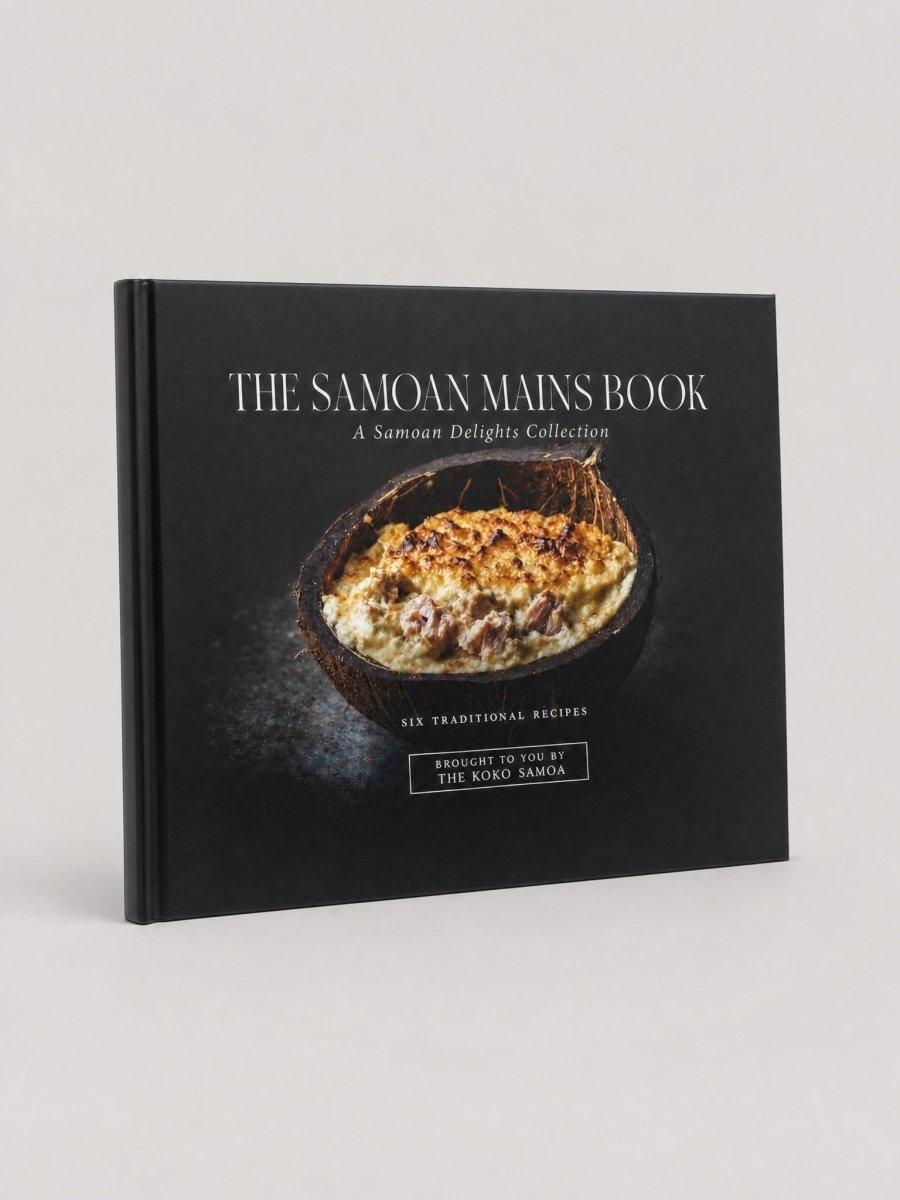
A recipe keepsake is the one that keeps giving, because most families have never written their version down. Handing an aunty a hardcover book of the mains says her cooking is worth recording, which is a bigger compliment than flowers.

A recipe keepsake and a mug, sold together for less than the two separately. Given to the house, used long after the leftovers are finished.
See the Thanksgiving shelf →What happens to the leftovers?
They go home with people. That is not an afterthought, it is part of the day. Somebody will have brought containers, and if they have not, the host will send food home in whatever is in the cupboard and you will be returning that container for the next two years.
It is the same instinct as a to'ona'i and the same instinct behind a fa'alavelave: food leaves the house with the people who came. Nobody goes home empty.

How do you cook for thirty people without losing the day?
Cook the things that scale and buy the things that do not. That is the only rule that survives contact with a Samoan Thanksgiving, where the headcount grows by six between the invitation and the morning.
| Dish | Scales to 30 | Make ahead |
|---|---|---|
| Sapa sui | Easily. One pan feeds twenty | Yes, day before. Improves |
| Palusami | Yes, but oven space is the limit | Same day only |
| Fa'alifu fa'i | Easily | Day before, reheat in the cream |
| Oka | Yes, but the lime keeps working | Two hours ahead at most |
| Turkey | One bird feeds twelve. Do the maths early | Brine the day before |
The two failures that repeat every year are oven space and fridge space, not cooking skill. Count how many things need an oven at the same temperature at the same time, and solve that on paper before you shop.
And accept that people will bring food you did not ask for. That is not a problem to manage, it is the day working correctly.
Nothing here is sitting in a warehouse. Each piece is printed and sewn after the order is placed, which has two consequences worth planning around. The good one is that there is no dead stock, so a print does not get discounted into landfill at the end of a season and sizes that sell slowly still exist. The inconvenient one is the production window: there are several days between you paying and anything being handed to a courier.
The practical rule is three weeks from order to door for Australia and New Zealand, and closer to four if it is crossing an ocean. Work backwards from the date you need it, not forwards from today. There is more on why the model works this way in why made to order is the future of sustainable fashion.
Frequently asked questions
What Samoan food is served at Thanksgiving?
Sapa sui, palusami, fa'alifu fa'i, oka and panipopo are the most common, served alongside the turkey rather than instead of it.
What is sapa sui?
Samoan chop suey: glass noodles with beef, soy and vegetables. It feeds a crowd, travels well in a foil pan and tastes better the next day, which is why it is on almost every Samoan Thanksgiving table.
What should I bring to a Samoan Thanksgiving?
Ask the host what dish they want, bring exactly that, and bring something for the house as well. An apron, a tea towel or a recipe keepsake all get used long after the day.
Can Samoan dishes be made the day before Thanksgiving?
Sapa sui improves overnight. Palusami is best on the day. Oka must be made within a couple of hours of serving because the lime keeps working on the fish.
Set the table
Recipe keepsakes, aprons, mugs and the pieces a feast day is built on.
Shop the Thanksgiving shelf →Made to order. Order two to three weeks before the day.
Read next: Traditional Samoan Recipes: A Beginner's Guide · How to Find Authentic Samoan Food Near Me


