

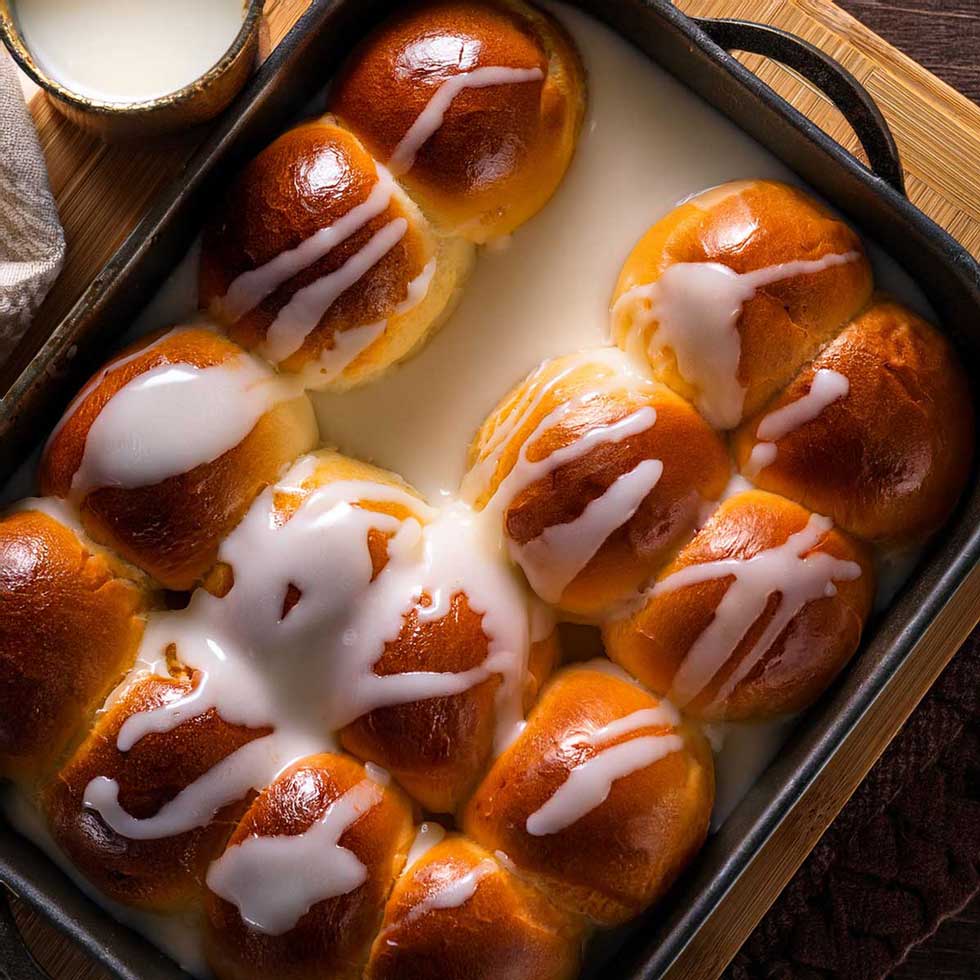
Pani Popo are soft bread rolls baked in a tray of coconut cream until the base turns custardy and the tops go golden. They are sweet enough to be dessert, mild enough to sit beside savoury food, and easy enough to make on a Sunday afternoon without clearing your schedule. The overview below covers the method. Exact yeast hydration, the coconut cream reduction ratio, and the overnight make-ahead method live in the Samoan Recipe Club.
In this guide
This recipe lives in the Samoan Recipe Club — the full Samoan Delights collection on your phone while you cook. Your screen stays awake, ingredients tick off as you go, and every dish comes with the story behind it. Plus 30% off everything in the store, automatically.
Prefer it on your shelf? The hardcover cookbook →
- What are Pani Popo and where do they come from?
- What ingredients do you need for Pani Popo?
- How do you make Pani Popo step by step?
- What are the best serving ideas?
- How do you store and reheat Pani Popo?
- Frequently asked questions
What are Pani Popo and where do they come from?
The name is straightforward: pani means bun or bread; popo is the Samoan word for mature coconut. Together they describe a dish that has been at the centre of Samoan hospitality for generations. What makes Pani Popo different from ordinary dinner rolls is the baking method: rich coconut cream is poured over the risen, unbaked rolls before they go in the oven. The cream soaks into the base, creating a custardy layer while the tops remain light and golden.
Samoan parish bake sales popularised these buns in the 1950s, when American flour aid met generations-old coconut stewardship. Earlier versions were shaped by hand and proofed under banana leaves in a technique called fa'a-luau, which let the dough absorb subtle leaf aroma in the humid warmth. Modern bakers let dough hooks do the kneading, but the second rise still matters. Get it wrong and the buns are dense. Get it right and each roll pulls apart in ribbons.
Across the diaspora the recipe morphs. Hawai'i bakers spike the syrup with vanilla. Auckland cafes dust desiccated coconut on top. Brisbane food trucks stuff the rolls with pineapple jam. The core rule stays: serve them hot, sauce spooned over like island rain.
| Detail | What to know |
|---|---|
| Type | Sweet coconut buns |
| Samoan name | Pani (bun) + Popo (coconut) |
| Key technique | Pour coconut cream over unbaked rolls before oven |
| Texture | Custardy base, fluffy golden top |
| Serve at | To'onai, bake sales, breakfast, afternoon tea |
| Vegan-friendly? | Yes with plant-based milk and oil |
What ingredients do you need for Pani Popo?
- All-purpose flour
- Instant or active dry yeast
- Sugar
- Salt
- Warm water or milk
- Butter or oil
- Thick full-fat coconut cream (this is the signature ingredient; do not use light cream)
Precise gram weights, yeast-to-flour ratios, and brand notes live in the Samoan Recipe Club. That keepsake hardcover covers Pani Popo alongside five other traditional Samoan bakes.
How do you make Pani Popo step by step?
- Make the dough. Mix flour, yeast, sugar, salt, and warm liquid. Knead until the dough is smooth and elastic. This takes about 8 to 10 minutes by hand.
- First rise. Cover the dough and leave in a warm place until it doubles in size.
- Shape the rolls. Divide and shape into rounds. Place into a greased baking dish with a small gap between each roll.
- Second rise. Let the rolls proof until they are puffy and nearly touching. This is the step that makes them soft. Do not rush it.
- Pour the coconut cream. Spoon full-fat coconut cream evenly over the top of the unbaked rolls, letting it settle into the gaps.
- Bake. Until the tops are golden and the coconut sauce is bubbling at the base.
Exact temperatures, the yeast-hydration curve, and the overnight refrigerator proof method are in the Recipe Club. In a hurry? Frozen unbaked dinner rolls and a can of coconut cream will get you most of the way there for a weeknight version.
What are the best serving ideas?
- Serve straight from the tray, warm. Spoon extra sauce from the base over each bun before eating.
- Pair with strong black tea or a mug of Koko Samoa for an afternoon that feels like a Sunday.
- Alongside a savoury to'onai spread, Pani Popo works as the sweet side rather than a dedicated dessert.
- Dust desiccated coconut over the top before serving for an Auckland-style finish.
For more Samoan bakes that pair well with afternoon tea, see the Masi Popo recipe. The two are often served together. Browse the full books collection for the complete recipe set.
How do you store and reheat Pani Popo?
Pani Popo is best the day they are made. Store covered at room temperature for one day, or refrigerate for up to three. To reheat, cover with foil and warm in the oven so the rolls soften without drying out. Full freeze-and-bake instructions and a make-ahead dough guide are inside the Recipe Club.
If you are making this to give away rather than to eat, the Samoan gifts that are never the wrong size covers the keepsakes and kitchen pieces that get handed over with it.
Frequently asked questions
Can I make Pani Popo vegan?
Yes. Use plant-based milk and oil instead of dairy. Coconut cream is naturally vegan. the Recipe Club outlines vegan variations and adjustments for texture.
Why is my Pani Popo dough dense?
Most likely over-kneading, under-proofing, or an incorrect liquid ratio. The second rise in particular needs enough time for the rolls to become visibly puffy before baking. the Recipe Club includes troubleshooting guides and texture comparisons.
Can I use sweetened condensed milk instead of coconut cream?
Some people do, but that is a different flavour profile and not the traditional Samoan version. For authentic Pani Popo, full-fat coconut cream is the right choice.
Do I pour the coconut cream on before or after baking?
Before. Pour it over the shaped, proofed rolls before they go in the oven. The cream soaks into the base during baking to create the custardy layer that defines Pani Popo.
How much coconut cream should I use?
Enough to cover the base of the baking dish generously. The precise amount relative to your dough weight is in the Recipe Club. Too little and you lose the custardy base; too much and the buns sit in liquid and go soggy on the bottom.
the Samoan Recipe Club
Pani Popo, Masi Popo, and four more traditional bakes. Precise ratios and make-ahead guides. Gift-ready keepsake hardcover.
Made-to-order by a Samoan-owned brand. Worldwide shipping.
This recipe lives in the Samoan Recipe Club — the full Samoan Delights collection on your phone while you cook. Your screen stays awake, ingredients tick off as you go, and every dish comes with the story behind it. Plus 30% off everything in the store, automatically.
Prefer it on your shelf? The hardcover cookbook →


