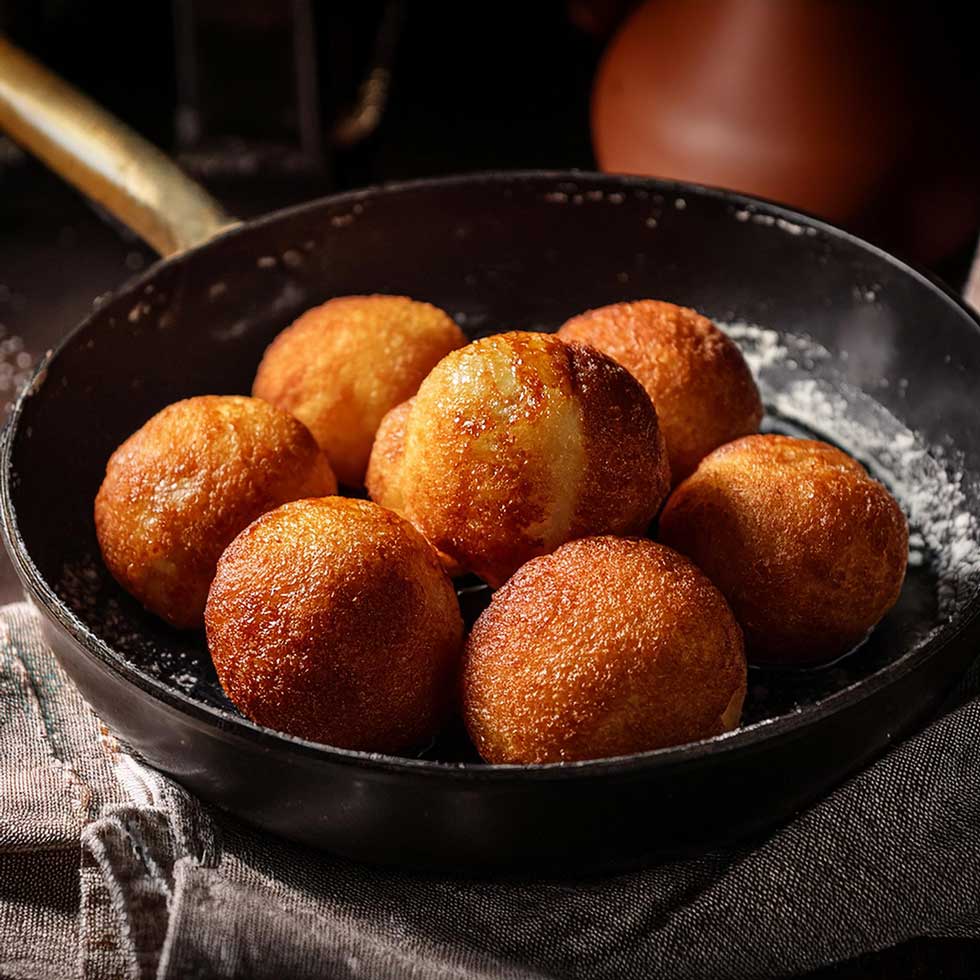
Panikeke are Samoa's golden bite-sized fritters: deep-fried dough that is crisp outside, soft inside, and gone before the plate hits the table. Mix the batter in one bowl, drop it into hot oil by the spoonful, and serve with a drizzle of koko syrup or a dusting of icing sugar. That is the whole job.
Below you will find the full method, the batter debate explained, ingredient swaps and every common question people have before they fry their first batch.
In this guide
- What is panikeke and where does it come from?
- Panikeke at a glance
- What you need to make panikeke
- How to make panikeke
- The batter debate: thick vs thin
- What to serve with panikeke
- Storage and reheating tips
- Take more recipes home
- Frequently asked questions
What is panikeke and where does it come from?
The name is a direct phonetic borrowing: "pani" from pancake, "keke" meaning cake in Samoan. It sits right there in the word, the meeting point between two food cultures.
The origin story traces back to American whaling fleets that anchored off Upolu in the late 1800s. Sailors traded goods and, critically, introduced baking powder to island cooks who had never worked with chemical leavening before. Samoans already had coconuts, local sugar cane, breadfruit and bananas. The new ingredient unlocked a new format: a batter that puffed in hot oil instead of collapsing flat. Mashed bananas went in, raw sugar went in, and panikeke was born.
What makes this history interesting is that the dish was never borrowed wholesale. Samoans took the leavening agent and built something original around what they already had. The result is closer to a South Pacific banana fritter than anything from an American ship's galley.
Today panikeke works as breakfast, afternoon snack, or dessert. It shows up at church fundraisers, after-school hungry hours, and on White Sunday tables dusted in icing sugar. You can eat it with your hands. That matters.
Panikeke at a glance
| Detail | Notes |
|---|---|
| Prep time | 10 minutes |
| Cook time | 15 to 20 minutes per batch |
| Serves | 4 to 6 as a snack |
| Key equipment | Deep pot or wok, two spoons or small scoop |
| Served at | Breakfast, afternoon tea, White Sunday, church fundraisers |
| Classic pairing | Koko Samoa (Samoan hot chocolate) |
What you need to make panikeke
- All-purpose flour
- White sugar or raw sugar
- Baking powder
- Salt
- Water, milk, or coconut water
- Ripe mashed banana (optional but traditional)
- Vanilla extract (optional, adds warmth)
- Ground cinnamon (optional)
- Neutral oil for deep frying (vegetable, canola or coconut)
Seasonal variants include mashed sweet potato or pumpkin in place of banana. Both work well and change the colour of the fritter slightly. Exact ratios and quantities are in the Samoan Delights tea time cookbook below.

Six traditional Samoan bakes including panikeke, beautifully printed and bound for the kitchen shelf or as a gift.
How to make panikeke
- Mix your dry ingredients: flour, sugar, baking powder and salt in a large bowl.
- Add your liquid gradually, stirring until you reach a thick batter that drops slowly from a spoon but does not pour. This is the key consistency: thick enough to hold its shape in oil, loose enough to cook through.
- Fold in mashed banana or any fruit variant if using. Add vanilla or cinnamon now.
- Heat oil in a deep pot or wok over medium-high heat. You want around 170 to 180 degrees Celsius. A small drop of batter should sizzle and float immediately.
- Using two spoons or a small cookie scoop, drop rounded tablespoons of batter gently into the oil. Do not crowd the pot: 4 to 5 fritters per batch keeps the oil temperature stable.
- Fry for 3 to 4 minutes per side until deep golden brown. They will rotate in the oil as the underside cooks and lifts. Do not rush this step.
- Drain on a paper towel. Repeat in batches with remaining batter.
- Serve hot, plain, dusted with icing sugar, or with a drizzle of peanut butter and koko syrup.
The batter debate: thick vs thin
There are two camps and both are correct for what they are trying to do.
A thick batter gives you a cake-like centre: denser, more bread-like, holds its heat longer. This is the most common version at church gatherings and the one most diaspora families grew up with.
A thin batter made with coconut water instead of plain water produces a crispier shell and a more open, doughnut-hole texture inside. Some families prefer this for the crunch. The trade-off is that thin batter can spread unevenly in the oil and is harder to shape.
The practical answer: start thick. Once you understand how your oil and batter behave together, experiment with loosening it.
What to serve with panikeke
The classic pairing is a cup of koko Samoa, the hot drinking chocolate made from roasted cacao beans. The bitterness of the koko cuts through the sweetness of the fritter in exactly the right way. It is one of those combinations that does not need explaining once you have tried it.
Other serving options that work:
- Peanut butter drizzled warm over the top
- Koko syrup or coconut caramel
- Icing sugar on White Sunday for a dressed-up version
- Stacked in towers with a toothpick for parties
- Served alongside palusami at a to'onai spread for contrast
They also work alongside the light, crisp dishes in a fuller spread. For a related Samoan dish to serve at the same table, try Samoan oka.
Storage and reheating tips
Panikeke are best eaten hot. They lose their crunch quickly at room temperature. If you have leftovers, store them in an airtight container and reheat in a 180-degree oven for 5 to 8 minutes, or in an air fryer for 3 to 4 minutes. Do not microwave them: you get soft and sad.
The batter can be mixed and refrigerated for a few hours before frying. Cover it tightly so the surface does not dry out. Give it a quick stir before use.
If your fritters come out raw in the middle, the oil was too hot. The outside cooked faster than the inside could follow. Drop the heat slightly and fry smaller batches.

All 24 traditional Samoan recipes in one A4 hardcover. Step-by-step guidance and the stories behind each dish.
Frequently asked questions
Can I bake panikeke instead of frying them?
Yes. Spoon the batter into a greased muffin tin and bake at 180 degrees for 15 to 18 minutes. The result is closer to a muffin than a fritter: less crisp, more cakey, no oil. It works for people avoiding fried food, but it is a different product. Call them panikeke muffins and nobody will argue.
How do I get panikeke round?
Two spoons or a small cookie scoop, steady oil temperature, and patience. Use one spoon to scoop and the other to push the batter off neatly. Round drops form better when the batter is thick enough to hold its shape as it hits the oil. If yours are spreading flat, thicken the batter with a little more flour.
Why are my panikeke raw in the middle?
The oil is too hot. The outside is cooking faster than the heat can reach the centre. Lower the oil temperature to around 170 degrees and fry in smaller batches so the temperature stays stable when you add cold batter.
Can I use coconut water instead of regular water?
Yes. Coconut water produces a slightly thinner batter and a crispier shell. It also adds a faint natural sweetness. The fritters will be a little less cake-like and more doughnut-hole in texture. Both are good.
What is the difference between panikeke and a banana fritter?
A banana fritter is typically a slice of banana dipped in batter and fried. Panikeke has banana mashed into the batter itself, making the fruit part of the dough rather than a filling. The texture and method are quite different. Panikeke also often has no banana at all: the fruit is traditional but optional.
Is there a traditional White Sunday version?
The White Sunday version is the everyday recipe dressed up: same fritter, but dusted generously with icing sugar and stacked tall. The presentation signals occasion. Some families add a little vanilla to the batter for White Sunday or serve them with a sweet coconut dipping sauce alongside.
More Samoan recipes, in your kitchen
The Samoan Delights cookbook collection has 24 traditional recipes with exact measurements, step-by-step guidance and the stories behind each dish.
Shop the cookbook collection →Made-to-order by a Samoan-owned brand. Worldwide shipping.


