Short answer: Samoan dance is not entertainment. Each form carries specific cultural meaning rooted in Fa'a Samoa. The graceful taualuga crowns major celebrations, the thundering fa'ataupati slap dance demonstrates collective discipline, the synchronized sasa tells stories of everyday life, and the fiery siva afi displays warrior courage. Together they make up Siva Samoa, one of the most powerful living expressions of Pacific identity today.
Every movement is intentional. Every beat, gesture, and costume tells a story that words alone cannot carry. In Samoan culture, art and ritual are inseparable. Dance is a living record of ancestry, a declaration of identity, and a direct line to the values that hold communities together. Here is what each form means and why it matters.
In this guide
- What is Siva Samoa?
- What is the taualuga?
- What does the fa'ataupati mean?
- What is the sasa?
- What is the siva afi?
- The four main forms at a glance
- Samoan dance in the diaspora today
- Frequently asked questions
What is Siva Samoa?
Siva Samoa is the general term for Samoan dance. Unlike some island traditions that emphasise rapid hip movement, classical Siva Samoa is built on deliberate, refined grace. The focus is on subtle hand and arm gestures that tell a story, paired with a serene facial expression.
Key characteristics include fluid, circular movements that mirror ocean waves and rustling palms, costumes of lavalava and woven pandanus, and rhythmic foundations laid by the pate (log drum) and smaller percussion. Each style occupies a specific role in ceremony and community life. They are not interchangeable. Performing the wrong dance in the wrong context would be a cultural misstep. Understanding which dance belongs where is part of understanding Fa'a Samoa.
What is the taualuga?
The taualuga is the most sacred of all Samoan dances. The word refers to the final stage of traditional house building, when the topmost rafter is secured to the fale, signifying completion. The dance carries the same meaning: it is the grand finale of any major celebration, performed at weddings, matai title ceremonies, and village festivals.
Traditionally it was danced only by the taupou (the unmarried daughter of the village chief) or the manaia (the chief's son), trained from youth in chiefly protocol. The dancer wears the tuiga, a towering ceremonial headdress representing royalty, honour, and the mana passed down through generations, made from nautilus shell, red feathers, and the hair of ancestors. The dance begins slowly and builds, with the dancer's family entering the circle to honour her, showering her with money and fine mats. The taualuga is a public declaration of family honour, chiefly status, and cultural continuity.
What does the fa'ataupati mean?
The fa'ataupati, or slap dance, is a men's dance of extraordinary power and precision. In sharp contrast to the taualuga's grace, it is thunderous, physical, and disciplined. Dancers use their own bodies as percussion instruments, slapping chest, thighs, and shoulders in complex synchronized patterns.
The dance dates back centuries, performed to celebrate weddings, births, and battle victories, and even used to settle disputes between villages. During the colonial period it was banned by authorities who considered it uncivilised, but communities continued practising it in private. The dance survived because the people refused to let it die. Today it expresses the core Samoan values of strength, unity, and discipline. The synchronized timing means every performer must fully commit to the group. No individual can dominate.
What is the sasa?
The sasa is one of the most visually striking forms of Samoan dance. Performed by large groups, often seated, using only hand and upper body movements, it turns precision into spectacle. The word sasa means to strike or to beat, and the dance involves rapid, synchronized claps and strikes.
Beyond the rhythm, the sasa tells stories. Hand and arm movements depict scenes from everyday Samoan life: cooking in the umu, paddling a canoe, weaving a basket, catching fish, sweeping the fale. Because it is performed by large synchronized groups together, the sasa is a powerful symbol of community cooperation. No individual stands out. Everyone moves as one.

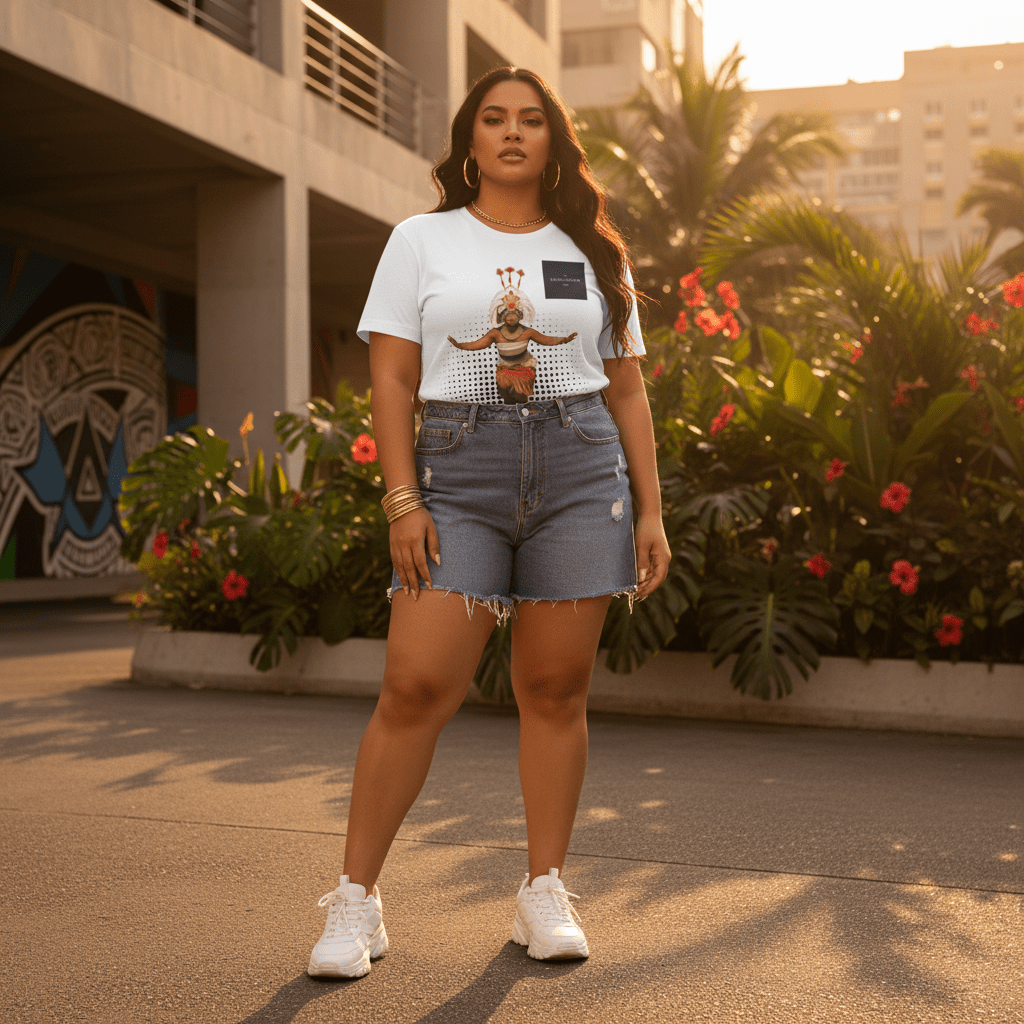
The taupou is the one who dances the taualuga. This print honours her grace, carried into something you can wear any day.
What is the siva afi?
The siva afi, or fire knife dance, is the most internationally recognised form of Samoan performance: a thrilling display of bravery, agility, and precision with roots deep in Samoan warrior tradition. The weapon used is the nifo oti, meaning tooth of death, a traditional war club with a hooked end. The twirling movement originated in ancient combat training.
In 1946, a Samoan performer named Chief Letuli wrapped the ends of the nifo oti in cloth and set them alight. The siva afi was born and rapidly became a global icon of Pacific courage. Today, siva afi competitions are held across the diaspora, including the Siva Afi Aotearoa Festival in New Zealand. The dance has travelled far from its warrior origins, but its core message remains unchanged: discipline, courage, and cultural pride.
The four main forms at a glance
| Dance | Performed by | Meaning |
|---|---|---|
| Taualuga | Taupou or manaia, or guest of honour | Sacred grand finale, family honour and chiefly status |
| Fa'ataupati | Men, in groups | Strength, unity, discipline; body as percussion |
| Sasa | Large seated groups, men and women | Community cooperation, scenes of daily life |
| Siva afi | Skilled solo performers | Warrior courage, agility, and pride |
Samoan dance in the diaspora today
For Pacific families living in Australia, New Zealand, and beyond, dance is one of the most powerful tools for cultural transmission. When children learn the fa'ataupati or the taualuga, they learn far more than movement. They learn language, history, values, and belonging. The ASB Polyfest in Auckland, one of the largest Pacific festivals in the world, features a dedicated Samoan stage where schools compete, with thousands of young Pacific Islanders rehearsing for months.
Siva schools operate across Auckland, Sydney, Melbourne, Brisbane, and Pacific communities in the United States, teaching young Samoans to carry the tradition, not just perform it. For those who cannot access a siva school, wearing Samoan heritage is another way to carry culture daily. Our guide to Samoan culture in Australia and New Zealand explores how the diaspora keeps Fa'a Samoa alive, and our complete guide to Samoan fashion covers how design carries the same values.

The ula fala is worn for the dances that matter most. Carried into an everyday tee, it keeps a piece of that ceremony close on ordinary days.
Frequently asked questions
What is the most important Samoan dance?
The taualuga is considered the most important and sacred Samoan dance. It is performed by the highest-ranking young woman or man of the family (the taupou or manaia) at major celebrations including weddings, matai title ceremonies, and village festivals. The dancer wears the tuiga, a ceremonial headdress made from nautilus shell, red feathers, and ancestral hair.
What is the fa'ataupati and where does it come from?
The fa'ataupati, or slap dance, is a men's group dance in which performers use their own bodies as percussion instruments, slapping chest, thighs, and shoulders in precise synchronized patterns. It dates back centuries in Samoan culture, was historically used to celebrate major events and settle disputes, and was banned during the colonial period before surviving through community practice.
What does siva afi mean and when was it created?
Siva afi means fire knife dance in Samoan. While the weapon used (the nifo oti war club) has ancient roots in Samoan warrior tradition, the fire element was introduced in 1946 by Chief Letuli when he wrapped the ends of the club in cloth and ignited them. The siva afi has since become an internationally recognised symbol of Samoan courage and skill.
Is Samoan dance still practised outside of Samoa?
Yes. Samoan dance is actively practised across Australia, New Zealand, and the United States through siva schools, community groups, and major events like the ASB Polyfest in Auckland and the Siva Afi Aotearoa Festival in New Zealand. For Pacific diaspora communities, dance is one of the most important tools for teaching cultural values and identity to the next generation.
What do Samoan dancers wear for the taualuga?
The taupou traditionally wears the tuiga, a towering ceremonial headdress made from nautilus shell, red feathers, and the hair of ancestors. The body is adorned with the ie toga (fine mat) worn as a garment, secured with a tapa sash. These materials are deeply symbolic: red feathers were equivalent to gold in Polynesian trade, and nautilus shell was so rare it had to be imported from Tonga.
Carry the grace of the siva
The same pride found in the taualuga, in Taupou-led tees and apparel from a Samoan-owned brand.
Shop the collection →Made-to-order by a Samoan-owned brand. Worldwide shipping.


