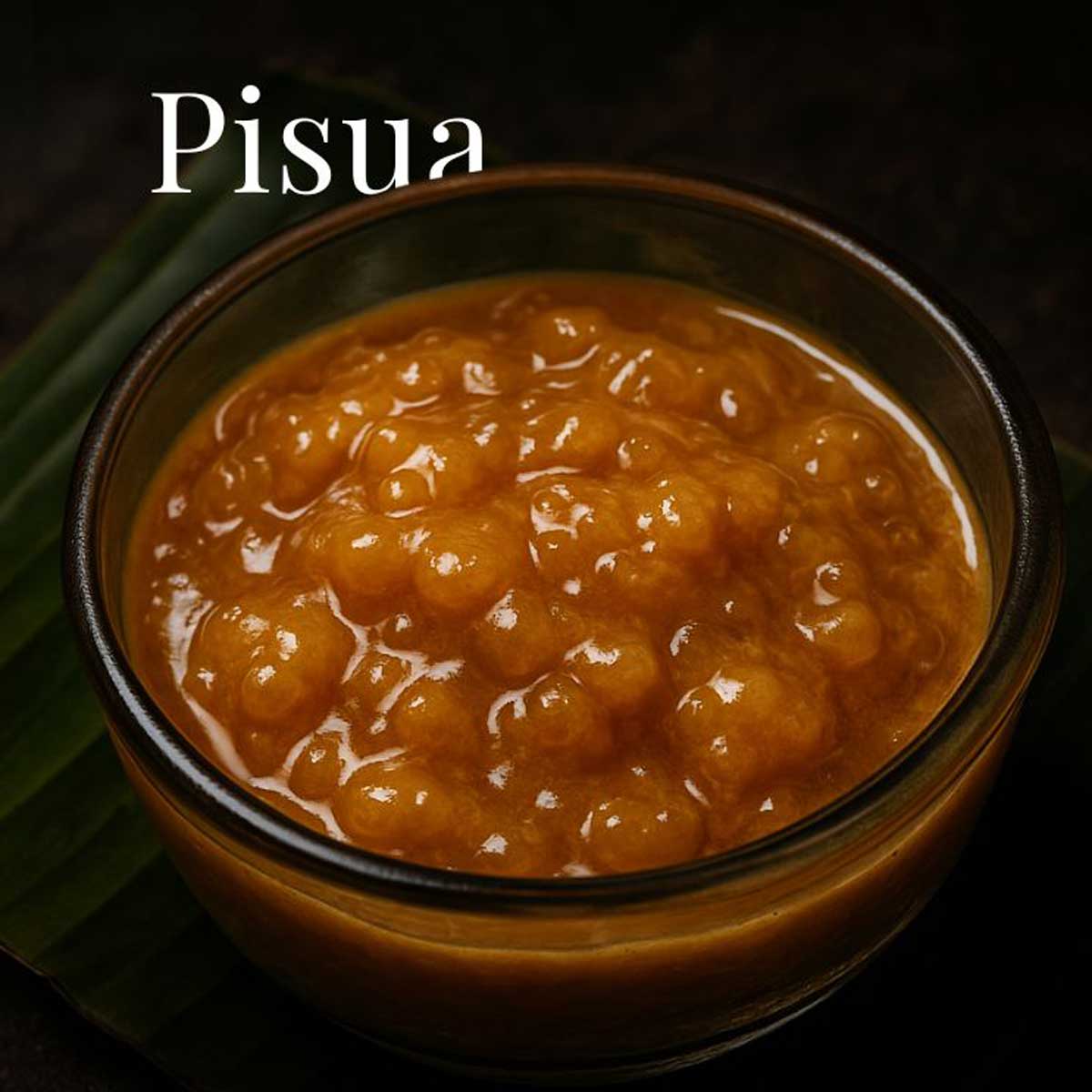
Pisua is a traditional Samoan pudding made from cooked and mashed taro or cassava, combined with full-fat coconut cream and sugar. The result is a smooth, thick, lightly sweet dish that sits between porridge and pudding in texture. It is quiet, communal food. Not every great dish announces itself. This one shows up and delivers.
In this guide
- What is pisua and what does it taste like?
- What is the cultural meaning of pisua in Samoan tradition?
- What ingredients do you need?
- How do you make pisua step by step?
- What are the best variations and serving ideas?
- Frequently asked questions
What is pisua and what does it taste like?
Pisua is made from grated or pounded starchy root vegetables, primarily taro (talo) or cassava (tapioca), cooked together with coconut cream and sweetened with sugar. The starch breaks down during cooking, producing a smooth, thick, richly flavoured pudding. Some families use taro exclusively. Some use cassava. Some combine both. Some add banana for sweetness. The common thread is Pacific starch and coconut cream, which is the foundation of much Samoan dessert cooking.
In texture, pisua falls somewhere between a thick porridge and a pudding. It is denser than custard but lighter than fa'ausi. Warm or at room temperature, it works as a dessert or a sweet afternoon snack. The umu version, where taro is cooked in the earth oven and then combined with fresh coconut cream, has a subtle earthy smokiness that the stovetop version does not quite replicate.
| Detail | What to know |
|---|---|
| Type | Samoan taro or cassava pudding |
| Texture | Between thick porridge and pudding |
| Key ingredients | Taro or cassava, full-fat coconut cream, sugar |
| Serve warm or cold? | Both. Warm is traditional; cold from the fridge next day is also good. |
| Serves | 6 to 8 (make enough for the table, and then some) |
| Make-ahead? | Yes, refrigerates 3 to 4 days |
What is the cultural meaning of pisua in Samoan tradition?
Taro is the most culturally significant food plant in Samoa. It has been cultivated in the islands for thousands of years and appears in Samoan mythology, ceremony, and everyday diet. Taro is associated with sustenance, generosity, and the earth. Using taro in sweet dishes like pisua connects the meal to that deep agricultural and spiritual tradition.
Coconut is similarly fundamental. The coconut palm is described in Samoan tradition as providing shelter, food, and drink. The act of squeezing coconut cream for cooking is itself a rhythmic, meditative task that many Samoan women describe as central to their cooking identity.
Pisua is typically made in larger quantities than a single serving and shared freely. The idea of making a small individual portion runs counter to the communal food ethic of Fa'a Samoa. You make enough for everyone at the table, and then some. That logic is baked into the recipe.
What ingredients do you need?
- 500g taro or cassava (or a combination), peeled and chopped
- 400ml full-fat coconut cream
- 3 to 4 tablespoons sugar (adjust to taste)
- 1/2 teaspoon salt
- 1/2 cup water
- Optional: 1 to 2 ripe bananas, sliced; or 1/2 cup ripe pineapple
- Optional: 1/2 teaspoon vanilla extract
The full recipe with precise timing, the umu method, and the coconut cream ratio are in the Samoan Comfort Book, which covers pisua alongside five other classic Samoan comfort dishes.

Pisua and five more traditional Samoan comfort dishes. Full methods, umu notes, and the coconut cream ratios that make each dish work.
How do you make pisua step by step?
- Cook the taro. Peel and chop the taro. Cover with cold water, bring to a boil, and cook for 20 to 25 minutes until very tender. A fork should slide in with no resistance. If using cassava, allow 15 to 20 minutes. Drain well.
- Mash or blend. While still hot, mash the taro with a potato masher until smooth. For a very smooth pisua, use a stick blender. Some texture is fine; pisua is not meant to be perfectly smooth.
- Combine with coconut cream. Transfer the mashed taro to a saucepan. Add coconut cream, sugar, salt, and water. Stir over medium heat until fully combined and smooth. Add banana or pineapple now if using.
- Cook and thicken. Continue over medium-low heat for 10 to 15 minutes, stirring frequently. The starch from the taro combines with the fat in the coconut cream and the mixture thickens. Adjust consistency with more water to thin, or cook longer to thicken.
- Serve. Spoon into bowls. Pour a little extra coconut cream over the top. Eat warm.
Umu method
Taro is cooked in the earth oven until very soft, then combined with fresh coconut cream and sugar, wrapped in taro leaves, and returned to the umu. The result has an earthy smokiness that the stovetop version cannot replicate. Worth making when you already have an umu going.
What are the best variations and serving ideas?
Cassava pisua is somewhat looser in texture than taro pisua and slightly sweeter. It pairs particularly well with ripe banana stirred through. Use fresh coconut cream squeezed from mature coconut flesh if you can: the flavour difference is significant, more complex and intensely coconutty.
- Serve warm as a dessert at Sunday to'onai.
- Serve at room temperature as a sweet snack during long family gatherings.
- Cold from the refrigerator the next day it will have thickened further. Stir in a spoon of coconut cream to loosen.
- Pairs well with Kopai as part of a Samoan sweets spread.
For more traditional Samoan desserts, browse the books collection. The Samoan Delights Combined Edition has 24 recipes including pisua, kopai, fa'ausi, and more.

24 traditional Samoan recipes in one gift-ready hardcover. Every comfort dish, main, and sweet from the islands.
Frequently asked questions
What is pisua?
Pisua is a traditional Samoan dessert made from cooked and mashed taro or cassava combined with coconut cream and sugar. It produces a smooth, thick pudding that can be eaten warm or at room temperature. It is a communal dish typically made in large quantities for family gatherings and community events.
Can I use canned taro for pisua?
Canned or frozen cooked taro can be used. Drain and mash well before proceeding. The flavour will be slightly less intense than fresh taro, but the texture of the finished dish is similar. Fresh taro produces the best result.
Is pisua the same as taro porridge?
Pisua is similar in concept to a taro-based sweet porridge but is typically thicker and richer due to the coconut cream content. It sits between a porridge and a pudding in texture. Pisua is the Samoan version of a broader Pacific taro and coconut cream tradition.
Can I make pisua ahead of time?
Yes. Pisua keeps refrigerated for 3 to 4 days, covered. It thickens considerably as it cools. To reheat, place in a saucepan with a splash of coconut cream or water and warm over low heat, stirring until smooth. It can also be eaten cold.
What starch works best in pisua?
Taro produces the most traditional result with a slightly earthy, complex flavour. Cassava produces a somewhat sweeter, slightly looser pisua. Some families combine both. All produce good results depending on what is available and personal preference.
The Samoan Comfort Book
Pisua and five more traditional Samoan comfort dishes. Full methods, umu notes, and the coconut cream ratios that make each dish work. Gift-ready keepsake hardcover.
Get the Comfort Book →Made-to-order by a Samoan-owned brand. Worldwide shipping.


