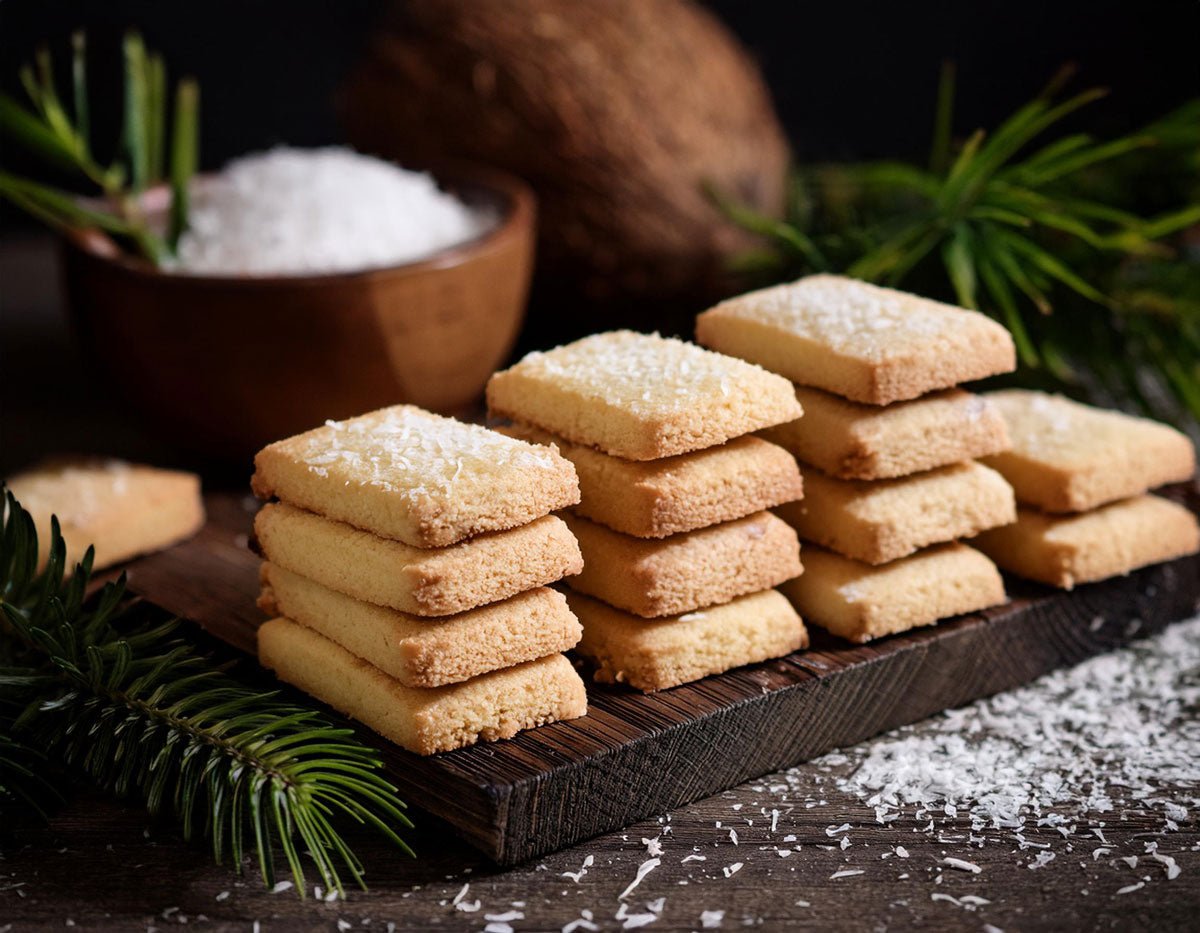
Masi Popo are Samoan coconut biscuits that shatter at the edge and melt in the centre. They use simple pantry ingredients, bake in under 20 minutes, and store well for up to a week. Scottish missionaries introduced shortbread techniques to Samoa in the 1830s; island bakers swapped cow butter for rendered coconut cream and created something better. The full recipe with gram weights, the gluten-free cassava variation, and long-life storage hacks are in the Samoan Tea Time Book below.
In this guide
- What are Masi Popo and where do they come from?
- What ingredients do you need for Masi Popo?
- How do you make Masi Popo step by step?
- What are the best serving ideas?
- How do you store Masi Popo?
- Frequently asked questions
What are Masi Popo and where do they come from?
"Masi" means biscuit. "Popo" is the Samoan word for mature coconut. Together they name a treat that has been part of island hospitality longer than most people can trace. You find Masi Popo in repurposed ice cream containers at family visits, on plates at church gatherings, tucked into school lunchboxes, and in gift tins for people who deserve something better than a store-bought biscuit.
The shortbread influence arrived with Scottish missionaries in the 1830s, but Samoan bakers adapted the recipe fast. Cow butter became rendered coconut cream. Dark moli syrup replaced refined sugar. The result was a biscuit that shatters like beach sand yet melts like coconut on a warm afternoon, which is exactly what beach sand does not do. Food historians now note this as an example of colonial contact cuisine transformed by local ingredients into something genuinely distinct.
During WWII, tins of Masi Popo reportedly travelled with Samoan soldiers to Bougainville, earning the nickname "coconut courage cookies." Today, boutique bakeries stamp them with tatau motifs for wedding favours. The home version remains unfussy and reliable.
| Detail | What to know |
|---|---|
| Type | Samoan coconut shortbread biscuit |
| Texture | Crisp at edge, tender crumb in centre |
| Main flavour | Coconut, lightly sweet |
| Storage | Up to 1 week in an airtight container |
| Gifting? | Yes, they travel and store well |
| Bake time | Under 20 minutes |
What ingredients do you need for Masi Popo?
- All-purpose flour
- Desiccated or freshly grated coconut
- Sugar
- Baking powder
- Salt
- Butter, margarine, or solid coconut oil
- Full-fat coconut milk (not watered-down cartons)
Fresh coconut yields the most aromatic result. Desiccated works well and is easier to source. The precise gram weights, dough chilling times, and the bake-time colour cues are in the Samoan Tea Time Book.

Masi Popo, Pani Popo, and four more traditional bakes. Gram weights, dough guides, and a gluten-free variation in one hardcover.
How do you make Masi Popo step by step?
- Mix the dry ingredients. Combine flour, baking powder, salt, sugar, and coconut in a bowl.
- Cut in the fat. Use your fingers or a pastry cutter to work the butter (or coconut oil) into the dry mix until it resembles coarse crumbs. Do not over-work it; the snap comes from not overdeveloping the gluten.
- Add coconut milk. Pour in slowly and mix until a soft, rollable dough forms.
- Shape. Roll into rounds or flatten with a fork on a lined tray. Some families use cookie cutters for special occasions.
- Bake. Until the edges are golden and the centres look just set. They will firm up as they cool.
- Cool completely. This is not optional. Warm Masi Popo are soft; cooled ones have the signature crispness.
What are the best serving ideas?
- With a hot mug of Koko Samoa or English breakfast tea: the classic pairing.
- Alongside Pani Popo for an afternoon tea spread that covers both biscuit and bun.
- Layered into dessert jars with whipped cream and fruit for a fusion trifle at gatherings.
- Packed into a gift tin with ribbon. Masi Popo travel without breaking and arrive tasting as good as they left.
For the full Samoan baking collection, browse the books collection.
How do you store Masi Popo?
Store in an airtight container at room temperature for up to one week. The crispness holds as long as there is no humidity getting in. To freeze the unbaked dough, shape into rounds, layer with baking paper, and freeze in a container. Full freeze-and-bake instructions and long-shelf-life hacks are in the Tea Time Book.

24 traditional Samoan recipes in one hardcover. Every bake, main, and sweet from the islands.
Frequently asked questions
Can I make Masi Popo without coconut milk?
Regular milk or plant-based alternatives work, but coconut milk adds key flavour. The result without it is closer to a plain shortbread. For texture tips and ideal substitutes, the Tea Time Book has a substitution chart.
Why are my Masi Popo too hard or too soft?
Oven type, biscuit thickness, and ingredient brands all matter. Too hard usually means over-baked or over-worked dough. Too soft usually means under-baked or too much liquid. The Tea Time Book has troubleshooting guides with photos of each stage.
Can I shape Masi Popo with cookie cutters?
Absolutely. The dough is forgiving. For special occasions like White Sunday or birthdays, heart or flower shapes work well. Press firmly so the cutter edge seals cleanly.
What is the difference between Masi Popo and regular shortbread?
Shortbread uses butter and has a richer, more buttery flavour. Masi Popo uses coconut milk (and sometimes coconut oil) which gives it a distinct coconut fragrance and a slightly different texture. The coconut keeps it relevant in Samoan food culture rather than being a European import.
Are Masi Popo suitable for gifting?
Yes. They hold their texture in an airtight tin for up to a week, travel without crumbling, and are recognisable and meaningful to Samoan families. They are one of the most common homemade gifts in Samoan households for exactly this reason.
The Samoan Tea Time Book
Masi Popo, Pani Popo, and four more traditional bakes. Gram weights, dough guides, and a gluten-free cassava variation. Gift-ready keepsake hardcover.
Get the Tea Time Book →Made-to-order by a Samoan-owned brand. Worldwide shipping.


