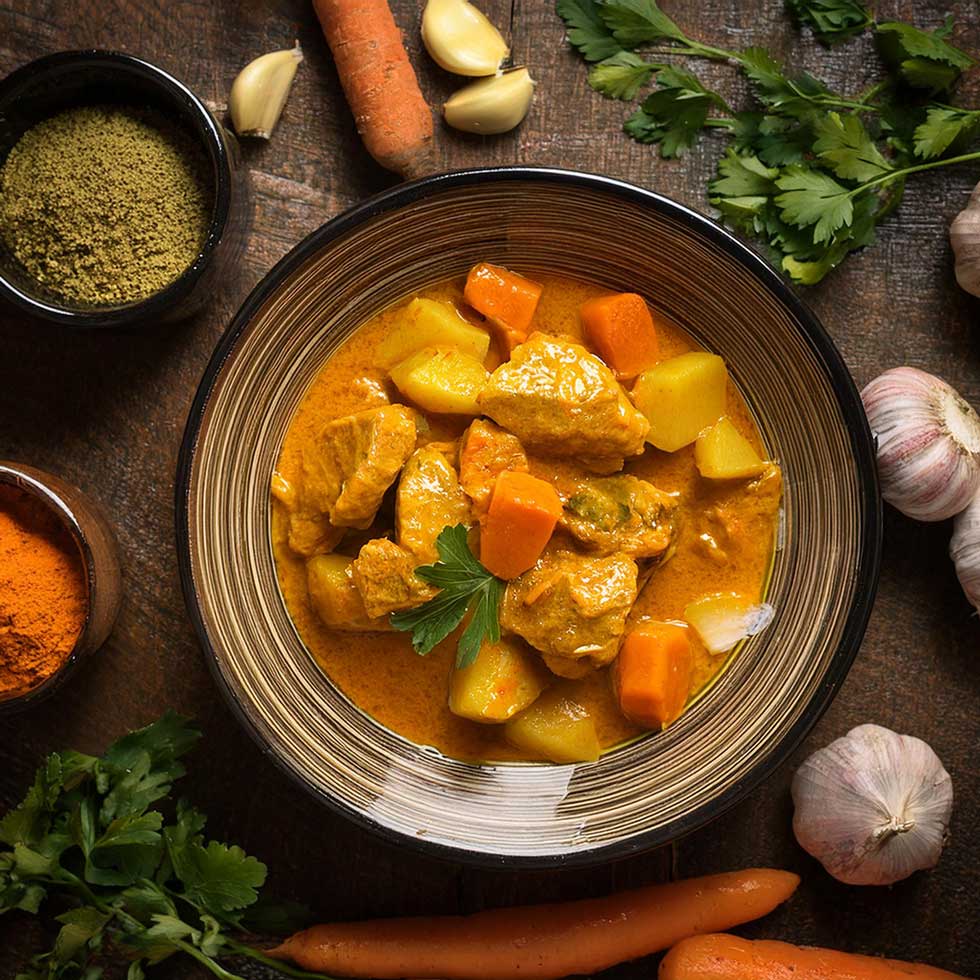
Kale Moa is Samoan-style chicken curry cooked in thick coconut cream with yellow curry powder, onion, garlic, and fresh ginger. It is milder and creamier than Indian or Southeast Asian versions. The spice level is low, the flavour is rich, and every Samoan household has their own version of it.
Bone-in chicken pieces (thighs and drumsticks) give the best flavour. Full-fat coconut cream only. Simmer it low and slow until the sauce thickens around the chicken. Serve over white rice, taro, or breadfruit.
In this guide
- What is Kale Moa and where did it come from?
- What makes Samoan chicken curry different?
- Ingredients you need
- How to cook Kale Moa step by step
- What to serve with Kale Moa
- Storage and leftovers
- Variations worth trying
- Frequently asked questions
What is Kale Moa and where did it come from?
Kale Moa literally means "chicken curry" in Samoan. The dish arrived during the colonial period, introduced through trade routes and foreign workers who brought South Asian cooking traditions into the Pacific. Samoan cooks did what they always do: they took the idea, threw out what did not fit, and made it their own.
Complex spice blends went out the window. Coconut cream came in. The result is a dish that belongs entirely to Samoa now. You will not find Kale Moa in a South Asian cookbook. You will find it in enamel pots on Sunday mornings, filling the house with a smell that pulls uncles off the front porch and cousins out of the backyard before anyone has called them.
It is a to'onai dish. That means Sunday feast. That means family around a table, taro on one side, rice on the other, and Kale Moa in the middle going cold because everyone is talking too much to eat it while it is hot.

24 traditional Samoan recipes including Kale Moa and the full to'onai spread, in a keepsake hardcover format.
What makes Samoan chicken curry different?
The biggest difference is heat. Kale Moa has almost none. Where Indian curries build on layered spice blends and Southeast Asian versions lean into chilli and lemongrass, Kale Moa trades all of that for coconut richness. The yellow curry powder is there for colour and warmth, not fire.
The other difference is simplicity. There is no toasting whole spices, no blending a paste, no 14-ingredient method. You brown your aromatics, bloom a tablespoon of curry powder, add the chicken, pour in coconut cream, and let the pot do the work. Most grandmothers who cooked this did not have a recipe card. They had a feel for it. That is actually a skill you can learn.
Some families added fresh curry leaves when they could get them. Others used whatever yellow curry powder came from the corner store. Both work. The coconut cream is the constant. That is where the flavour lives.
Ingredients you need
| Ingredient | Notes |
|---|---|
| Chicken pieces (bone-in) | Thighs and drumsticks give the most flavour. Boneless works but is less forgiving if overcooked. |
| Yellow curry powder | Contains turmeric, coriander, cumin, and fenugreek. Any supermarket brand is fine. |
| Full-fat coconut cream | This is not negotiable. Lite coconut milk makes a thin, pale sauce with none of the richness. |
| Onion | One large, diced. Sauteed until soft and golden before anything else goes in. |
| Garlic and fresh ginger | Both. Minced or grated. About 3 cloves garlic and a thumb of ginger. |
| Oil or butter | For sauteing. Butter adds flavour; coconut oil keeps it Pacific. |
| Salt and pepper | Season as you go, taste before serving. |
| Water or chicken stock | About half a cup to loosen the sauce. Stock adds depth. |
Optional additions: diced potatoes or green beans added partway through turn this into a one-pot meal. Both absorb the curry sauce beautifully and make the dish stretch further for a big family.
How to cook Kale Moa step by step
This takes about 45 minutes from start to finish. The steps are straightforward.
Step 1: Saute the aromatics. Heat oil or butter in a large heavy pot over medium heat. Add the diced onion and cook for 5 to 7 minutes until soft and golden. Add garlic and ginger and cook for another minute until fragrant.
Step 2: Bloom the curry powder. Add the yellow curry powder to the pot and stir it through the onion mixture. Cook for about a minute. This step is important. Dry heat activates the spices and the flavour deepens from raw and sharp to warm and rounded.
Step 3: Brown the chicken. Add the chicken pieces and turn them to coat in the spiced oil. Brown lightly on each side, about 2 minutes per side. You are building flavour here, not cooking through.
Step 4: Add liquid and simmer. Pour in the full-fat coconut cream and water or chicken stock. Stir to combine and bring to a gentle simmer. Reduce heat to low, cover, and cook for 25 to 30 minutes until the chicken is cooked through and the sauce has thickened. If adding potatoes, put them in at the 10-minute mark. Green beans go in for the last 5 minutes.
Step 5: Season and serve. Taste before serving and adjust salt. The sauce should coat the back of a spoon. If it is too runny, simmer uncovered for another 5 to 10 minutes. If it is too thick, add a splash of water.
What to serve with Kale Moa
White rice is the most common pairing and the easiest. The sauce soaks into the rice and carries the whole bowl. But at a proper to'onai, you would also see taro, breadfruit, and boiled green banana on the same table.
Taro gives the dish weight. Breadfruit is starchier and slightly sweet, which balances the curry. Green banana is underrated here: the firm texture holds up well against a saucy curry.
A handful of fresh coriander and a squeeze of lime over the top wakes everything up before serving. Not traditional, but not wrong either.
For related Samoan cooking, see our guides on Palusami and Sapa Sui, two other to'onai staples.

Six traditional Samoan mains in a keepsake hardcover. The to'onai dishes your family actually makes.
Storage and leftovers
Kale Moa is one of those dishes that actually improves the next day. The spices settle into the chicken and the sauce deepens overnight. If you have leftovers, do not feel bad about it.
Store in an airtight container in the fridge for up to 3 days. Freeze for up to a month. When reheating, add a small splash of coconut milk or water to loosen the sauce before warming on the stove over low heat. Microwaving works but the texture of the chicken suffers.
Variations worth trying
If you want a vegetarian version, replace the chicken with firm tofu (press and cube it first), chickpeas, or a mix of vegetables like kumara, carrot, and zucchini. The method is the same. The simmer time is shorter since vegetables cook faster than chicken.
For a deeper flavour, try browning the chicken in batches without crowding the pan. More surface contact with the hot pot means more colour and more flavour in the finished sauce.
Some families add a teaspoon of sugar to balance the spice. Some add a knob of butter at the end for gloss. Both are worth trying once you have the base recipe down.
Frequently asked questions
Can I use boneless chicken for Kale Moa?
Yes, but bone-in pieces (thighs, drumsticks) give more flavour because the bones release collagen into the sauce as it simmers. Boneless chicken breast works in a pinch but overcooks more easily. If you go boneless, reduce the simmer time to about 20 minutes.
What curry powder should I use?
Any yellow curry powder from the supermarket is fine. You do not need to track down a specific brand. The key spices are turmeric (for colour), coriander, cumin, and fenugreek. If you already have these as individual spices, you can blend your own at roughly equal parts.
Why is my sauce too runny?
Simmer uncovered for another 5 to 10 minutes with the heat slightly raised. The liquid will evaporate and the sauce will thicken around the chicken. Full-fat coconut cream also helps the sauce hold its body. If you used lite coconut milk, that is likely the cause.
Is Kale Moa spicy?
No. This is genuinely one of the mildest curries you can make. The yellow curry powder gives warmth and colour but almost no heat. If you want more heat, add a chopped fresh chilli with the garlic and ginger. If you are cooking for kids or people who do not like spice at all, the base recipe as written is safe.
Can I make it ahead for a big family meal?
Yes, and you should. Kale Moa holds well and tastes better the next day. Make it the night before, cool it completely, refrigerate it, and reheat gently with a splash of coconut milk. For a proper to'onai, this frees up the morning for everything else.
What is to'onai?
To'onai is the Samoan Sunday feast tradition. After church, families gather for a large shared meal that typically includes several dishes cooked in quantity. Kale Moa, Palusami, Sapa Sui, taro, and rice are all common to'onai dishes. It is less about the specific food and more about who is around the table.
Cook the full to'onai spread
24 traditional Samoan recipes in one keepsake hardcover. Kale Moa, Palusami, Sapa Sui, and more.
Browse all cookbooks →Made-to-order by a Samoan-owned brand. Worldwide shipping.


