

The hibiscus is the flower most people picture when they picture the Pacific, and it carries a different weight in each place it grows. In Hawaii the native yellow hibiscus, maʻo hau hele, is the state flower. In Samoa the same flower is aute. In Fiji it has its own festival. The motif travels, the meaning does not travel with it, and that difference is worth knowing before you wear one.
In this article
- Island by island
- Behind which ear
- The motif on cloth
- Aute in the range
- Buying it well
- Frequently asked questions
What does the hibiscus mean in each Pacific culture?
| Place | Name | What it carries |
|---|---|---|
| Hawaii | Pua aloalo, maʻo hau hele | The yellow native hibiscus is the state flower, made official in 1988 |
| Samoa | Aute | Everyday and ornamental. Grown at the house, worn in the hair, used in medicine |
| Fiji | Senitoa | The Hibiscus Festival in Suva has run since 1956 and is the country's biggest |
| Tahiti | Aute | Worn in the hair, and part of the standard flower adornment |
| Tonga | Kaute | Ornamental and widely grown |
The shared thread is that it is a living flower people actually grow and wear, not a symbol from a book. The differences are in the specifics, and those are local. There is no single Pacific meaning for a hibiscus, and anybody selling you one is inventing it.
Which ear do you wear a flower behind?
The widely repeated rule is right ear for available, left ear for taken, and it is real enough that people across the Pacific will read it that way. It is worth stating honestly that this is a modern and informal convention rather than an ancient law, and the practice varies between islands and between generations.
Two things are more reliably true. Older women often wear a flower regardless of either meaning, and at a church or a formal event the flower is ornament rather than a signal. If you are unsure, watch what the aunties are doing.
Where does the hibiscus sit in printed Pacific design?
It sits in two very different places, and telling them apart is the useful skill.
The first is traditional patterning: elei in Samoa, masi in Fiji, ngatu in Tonga. These are mostly geometric and the hibiscus is not a core motif in any of them. The second is the printed shirt tradition that grew up around Hawaii from the 1930s, which is where large tropical florals belong, and where the hibiscus is genuinely at home.
So a hibiscus on a camp collar shirt is entirely authentic to that shirt's own history. A hibiscus sold as an ancient Polynesian symbol with a fixed meaning is not. Both things can be true at once.
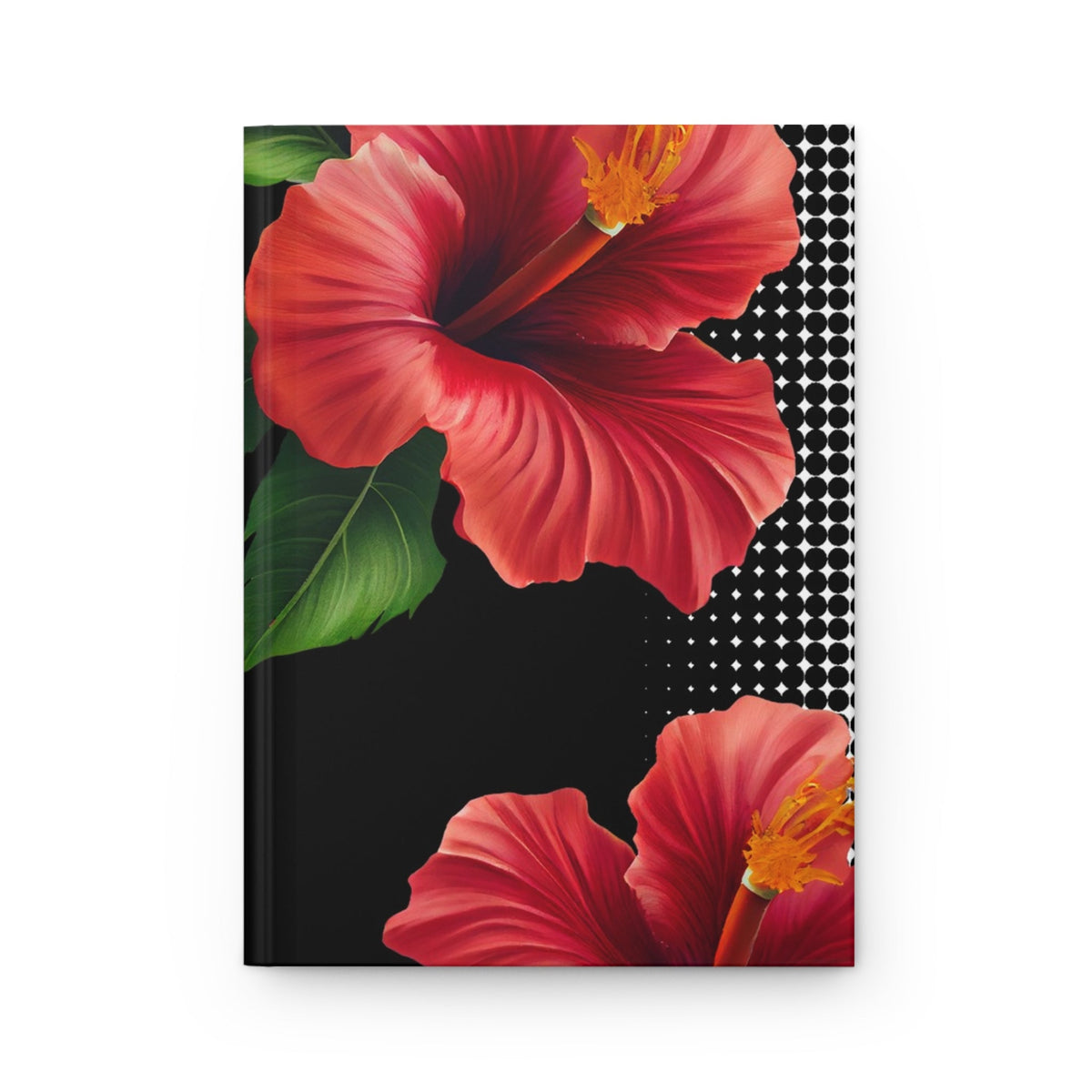
Ours lives under its Samoan name, aute, and we put it on the things that get picked up every day rather than on a shirt.

Our own hibiscus print. Big red flowers on a black halftone screen, deep enough to read from across the room.
See the Aute range →What does aute mean on a Samoan product?
Aute is simply the Samoan word for hibiscus, so an Aute print is a hibiscus print named in Samoan rather than in English. We use the Samoan word on the product and the English one in search listings, because those are two different jobs.
It is a small thing and it is the whole argument for buying Pacific design from Pacific people. The flower is the same flower. What you get with the Samoan name is the version that knows which island it is standing on.
If you want the wider picture on how Pacific patterns are named and told apart, Samoan design patterns covers siapo and elei, and Fijian masi covers the barkcloth tradition next door.
How do you buy a hibiscus print without buying a cliche?
Three tests, and they apply to any Pacific motif rather than just this one.
| Test | Good sign | Warning sign |
|---|---|---|
| Who made it | A named Pacific owner you can find | No people named anywhere on the site |
| What it is called | The local name, used correctly | One generic word covering every Pacific culture at once |
| What it claims | Says where a motif is from, or that it varies | A confident symbol dictionary with a fixed meaning for everything |
The middle one catches the most. The flower is aute in Samoan, kaute in Tongan, senitoa in Fijian and pua aloalo in Hawaiian, and a seller who knows that will use the right word for the right island. A seller who does not will use one label for all of them and sell the identical file on every garment.
The third test is the one people fall for hardest, because a confident explanation feels like expertise. Meanings across the Pacific genuinely vary by island, by village and by family, so a page that assigns one fixed meaning to every motif is telling you something about the seller rather than about the flower.

Red aute on a dotted monochrome ground. Named in Samoan on the product, because that is the island it is standing on.
See the case →Every piece here is printed after the order is placed, so allow about three weeks from order to door for Australia and New Zealand and closer to four across an ocean. Work back from the date you need it, not forward from today. There is more on the model in why made to order is the future of sustainable fashion.
How to choose a Hawaiian shirt covers the shirt tradition this floral grew up in, and the four things that make one worth owning.
Frequently asked questions
What is the Samoan word for hibiscus?
Aute. It is kaute in Tongan, senitoa in Fijian, and pua aloalo or maʻo hau hele in Hawaiian.
Is the hibiscus the state flower of Hawaii?
Yes. The native yellow hibiscus, maʻo hau hele, was made Hawaii's official state flower in 1988.
Which ear do you wear a hibiscus behind?
The common convention is right for available and left for taken. It is a modern informal practice rather than an ancient rule, and it varies between islands.
Is the hibiscus a traditional Polynesian symbol?
It is a real and widely grown flower across the Pacific, but it is not a core motif in traditional barkcloth patterning such as siapo, masi or ngatu. Large floral prints belong to the printed shirt tradition that grew up around Hawaii from the 1930s.
The flower, named in Samoan
The Aute print on the things you reach for every day.
Shop the Aute range →Made to order. Allow three weeks.
Read next: Samoan Design Patterns · Samoan vs Hawaiian


